
May 6, 2015
Following two consecutive quarters with GDP growth of 1.4% and 0.5%, respectively, and a modest employment gain for April, some people worry that the pace of economic activity is slowing down. We think that is an inaccurate interpretation of the economic tea leaves. Our sense is that the economy continues to chug along with GDP growth for the second quarter likely to be 2.3% and growth for the year of 2.2%.
The catalyst for the latest concern is the revelation that payroll employment rose 160 thousand in April and has risen 200 thousand per month in the last three months. The average increase in the past year has been 224 thousand. Thus employment is, in fact, slowing down. But with the economy at full employment that is exactly what we should expect.
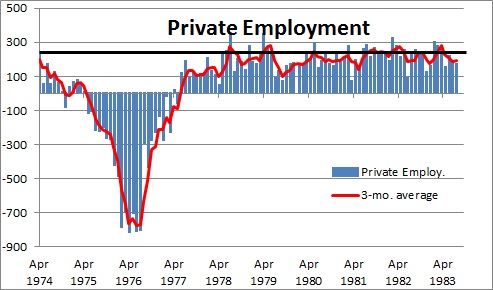
At full employment everyone who wants a job has one. The only place firms can find workers is from new entrants into the labor force. With the economy at full employment and the labor force growing by 150 thousand per month we should expect a gradual slowdown in employment to 150 thousand. But that does not mean the economy is weak. It simply means that everybody who wants a job already has one, and firms cannot find enough bodies to hire.
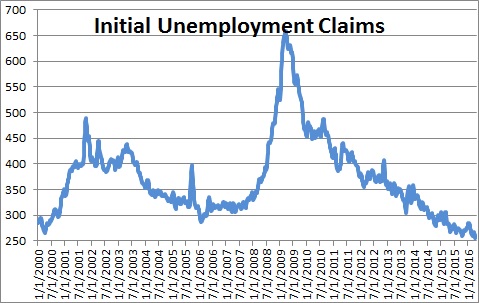
If employers were getting nervous we would expect to see corroborating evidence elsewhere and that is not happening. For example, we would expect some firms to lay off workers. But initial unemployment claims are the lowest they have been in 43 years — since 1973 to be exact! That is hardly a sign of impending doom.
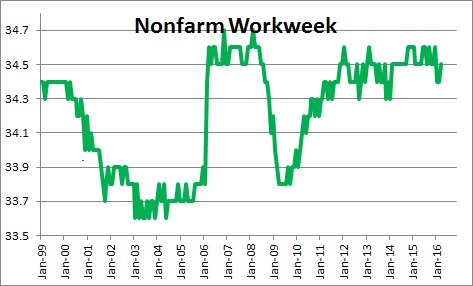
If firms were getting nervous we would expect them to shorten the workweek because they need to reduce output. That is not happening either. In fact the nonfarm workweek rose 0.1 hour in April which trumps the moderate 160 thousand increase in employment.
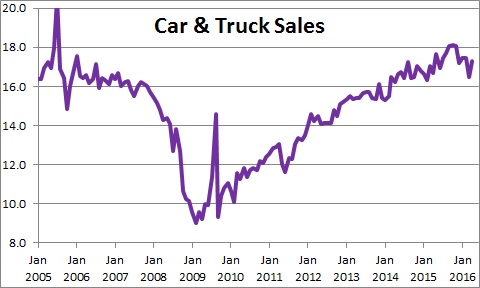
We would be more worried if there were some indication that the slower pace of hiring reflected a drop-off in demand. But demand growth still appears solid. Car sales surged in April to a 17.3 million pace. Car sales rarely surpass that pace.
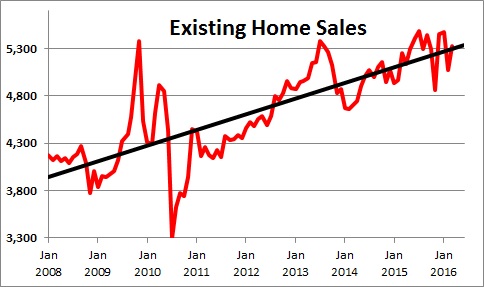
The same is true for housing which continues to chug along at a relatively rapid rate. These two sectors of the economy are important. Consumers do not buy cars and houses if they are feeling nervous. Because these are the two biggest ticket items in any consumer’s budget they are typically the first sectors to turn down when consumers get nervous. But that is not happening either. Thus, consumer spending should continue to chug along at about a 2.8% pace this year.
It is also important to note that the two weakest sectors of the economy may be turning upwards.
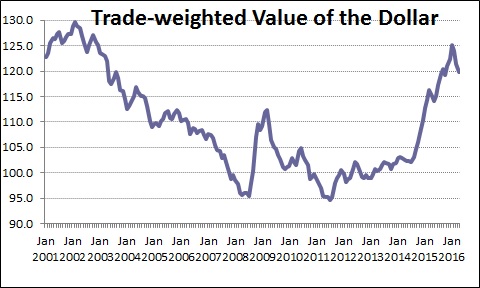
Trade has been dragged down by the strength in the dollar which rose 22% between mid-2014 and the end of last year. That increase in the dollar made U.S. goods more expensive for foreigners to purchase and, as a result, exports fell 5.5% in 2015 and the trade category subtracted 0.6% from GDP growth. However, in the past three months the dollar has fallen 5.0%. Thus, the drag on economic activity from the trade sector should gradually diminish as the year progresses.
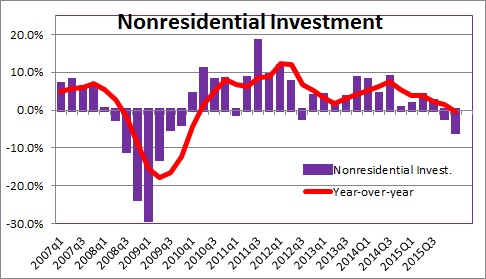
The other weak sector has been nonresidential investment which has been whacked by the drop in oil prices. Oil drillers shut down inefficient wells, curtailed spending on oil exploration and research, and ordered far less drilling equipment. As a result, nonresidential investment – which had been growing at about an 8.0% pace suddenly came to a screeching halt in late 2014.
However, oil prices have jumped in recent months from $26 per barrel at their low point to $45 currently. That price should be sufficiently high to cause oil drillers to stop shutting down rigs. Hence, the drag on GDP growth from the oil sector should soon end. It is worth noting that the increase in the nonfarm workweek in April was concentrated in the mining component where the workweek increased 0.6 week. This could well be a sign that the economic weakness caused by falling oil prices is nearing an end.

We conclude that the demand side of the economy continues to chug along. And if the demand side is holding up the production side and employment will do the same. The economy hit a soft patch in the winter of 2014-2015 but re-ignited in the spring and summer. We expect the same thing to happen this year. Not to worry.
Stephen Slifer
NumberNomics
Charleston, SC
Follow Me