
August 15, 2014
For the first five years of expansion GDP growth was generally disappointing for a variety of reasons — the Arab spring, the financial meltdown in Europe, the debt ceiling gridlock, the fiscal cliff, Superstorm Sandy, and the Deep Freeze of 2014. The economy plodded through the annual challenge and maintained upward momentum, but by at the end of the year growth was invariably less than had been expected.
While all of these factors contributed to slow growth an additional economic reality was that banks were not lending and consumers were not borrowing. Bank regulators required banks to hold far higher levels of capital to reduce the probability of failure. As a result, they were far more interested in raising capital than they were in making new loans to anyone. Consumers were scared. They had seen one-third of their net worth wiped out during the recession as the stock market collapsed and home prices plunged. Many of them lost their job. They more interested in paying down debt than in adding to it. For both of these reasons bank loans plunged during the recession. Borrowers and lenders have both been hesitant to take on debt or extend credit during the first five years of expansion.
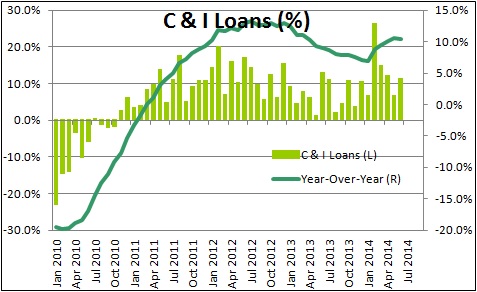
The thaw began in 2011 as banks became more willing to extend credit to businesses. Commercial and industrial loans (better known as business loans) began to climb in early 2011 and have been expanding at roughly a 10% pace for almost four years with no sign of a let up.
Bank lending to consumers has been a different story. Banks have been consistently willing to make student loans. Automobile loans begin to climb in mid-2011. But any type of real estate loan whether it was for a mortgage or a home equity line of credit was out of the question. Banks were burned so badly by the housing market during the recession that they had no interest in real estate. A lack of lending to support the housing market is important because real estate loans represent 75% of all consumer credit outstanding.
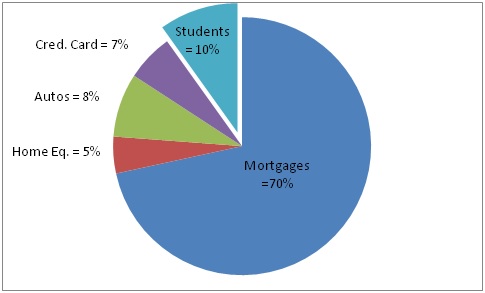
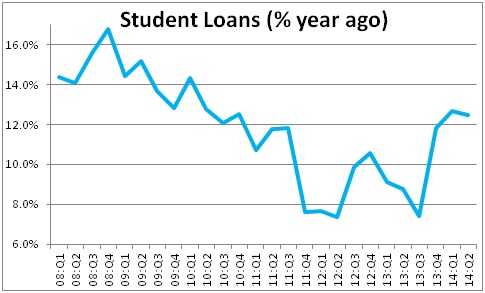
Banks love students. During the recession people were unable to find a job, so they chose to return to school in the hope that an advanced degree would enhance their employment opportunities. As a result, student loans surged during the recession and continue to expand at double digit pace. But student loans represent a very small 10% piece of the consumer credit pie. Bank willingness to make student loans is not surprising because they are essentially risk free. Students cannot discharge their student debt during bankruptcy. No wonder banks are willing to lend to students!
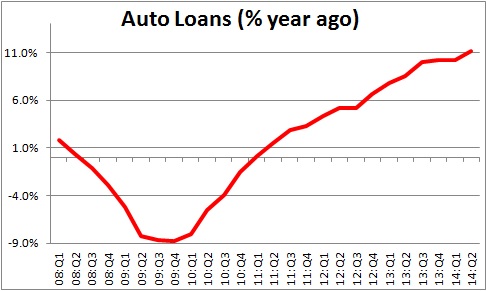
Apart from student loans which have grown steadily, the next category of consumer debt to turn upwards was automobile loans which began to rise in the spring of 2011. Like student loans automobile loans are small and represent only about 8% of all consumer credit outstanding.
Credit card debt plunged during the recession as consumers aggressively paid down this very expensive form of borrowing. Credit card debt finally began to level off in the middle of 2012 but consumers remain reluctant to build up their credit card balances. Credit cards are another small 7% piece of the consumer credit pie.
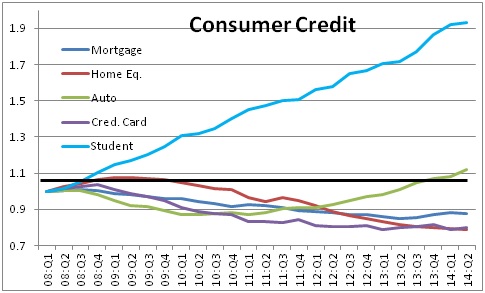
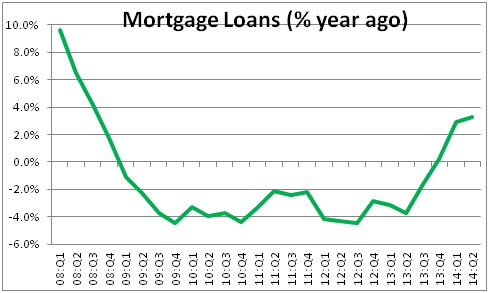
The big gorilla in the consumer credit world is real estate loans, –mortgages and home-equity loans combined — represent 75% of all consumer credit outstanding. For the first four years of expansion banks had no interest whatsoever in making such loans. But in the middle of last year mortgage loans finally began to rise. They have continued to grow steadily but did re-trench somewhat in the second quarter.
This renewed willingness of consumers to borrow and banks to lend is important because it stimulates the pace of economic activity. Consumers borrow to buy a new house or car, or perhaps to remodel their existing home. Businesses borrow to refurbish their assembly line or upgrade their technology. Without a loan much of that spending would not occur. Thus, a pickup in loan growth is welcome news for the economy and should put the economy on a somewhat faster growth track in the quarters ahead. Loan growth has been conspicuously absent for the past five years.
Stephen Slifer
NumberNomics
Charleston, SC
Follow Me