
November 16, 2012
The economy continues to plod along with 2.0% GDP growth which is hardly impressive. The economy is not going to get help from the trade sector in 2013 as Europe just fell back into recession. Japan is heading that same direction. And China is struggling to re-ignite its economic engine. The government sector cannot contribute to GDP growth next year. Its spending is constrained by bloated budget deficits and more debt than we can afford. That leaves the consumer and business investment as the only potential sources of growth. Fortunately, both sectors are primed and ready for takeoff. If only Washington would clear the runway!
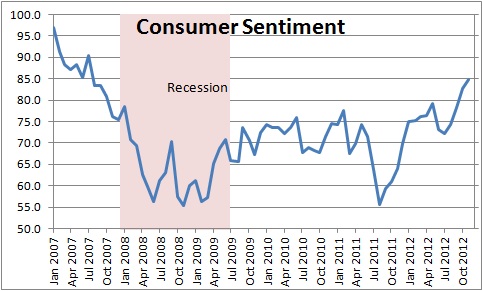
Consumer. Consumer sentiment is the highest it has been in five years. There is ample justification for that euphoria.
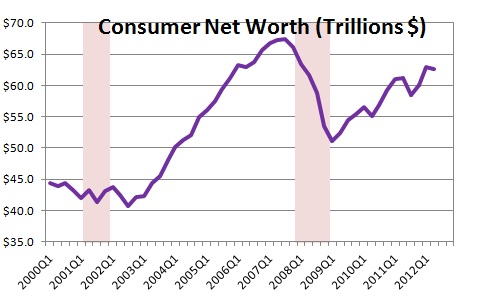
The rising stock market has allowed the consumer to recapture almost all of the net worth that was lost during the recession. And with home prices now beginning to rise, net worth should quickly climb to a new high.
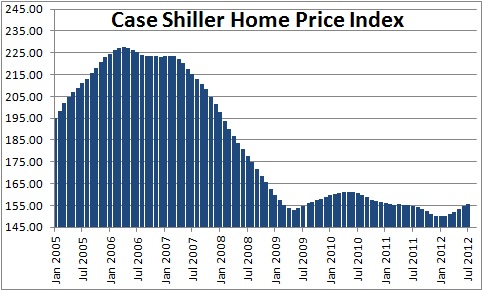
Homes today are more affordable than they have been at any time in the past 40 years. Home prices have fallen 30% from their peak value.
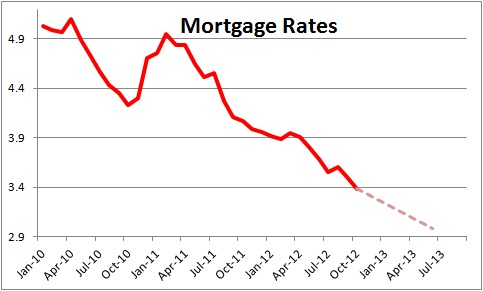
At the same time, thirty-year mortgage rates have dipped to a record low level of 3.4% — and are headed lower thanks to the Federal Reserve which plans to buy $40 billion of mortgage-backed securities every month. By this time next year mortgage rates are likely to be 3.0%. Furthermore, the Fed has pledged to refrain from tightening until the latter part of 2015.
Sensing bargains, potential homeowners have stepped up the plate and are now buying houses. This process will only accelerate in the years to come.
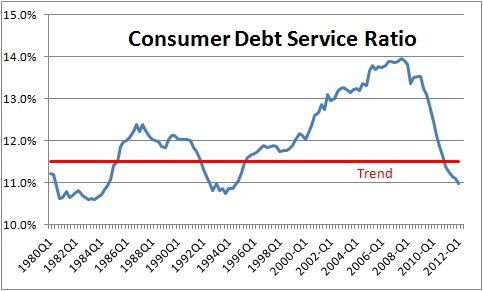
Meanwhile, consumers have paid down enormous sums of debt during the past four years and their debt is now well in line with income. They have the ability to quicken their pace of spending if they so choose.
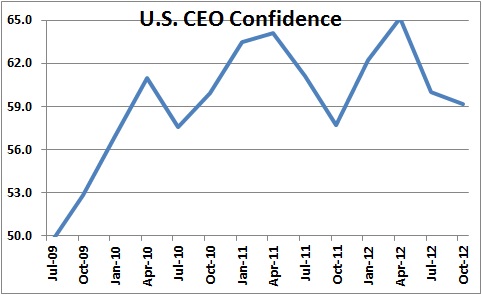
Business. CEO’s remain optimistic, although perhaps not as euphoric as the consumer.
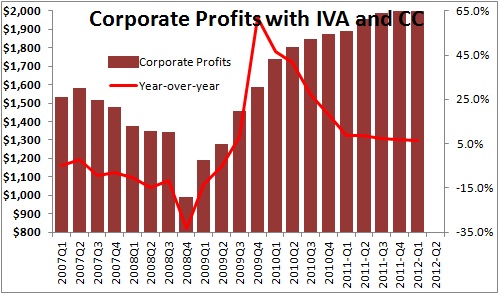
Corporate leaders took advantage of the recession to cut costs, lay off surplus workers, and boost productivity. That action has paid off as corporate profits have climbed to a record high level.
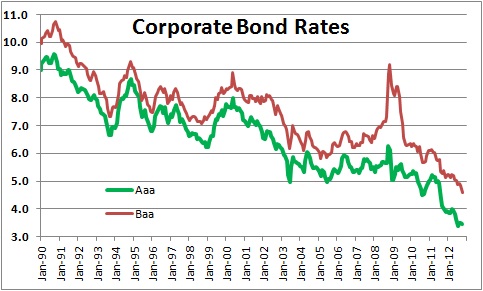
Corporate borrowing costs have fallen to their lowest level since the early 1960’s. Firms have replaced maturing high cost debt with less costly borrowing.
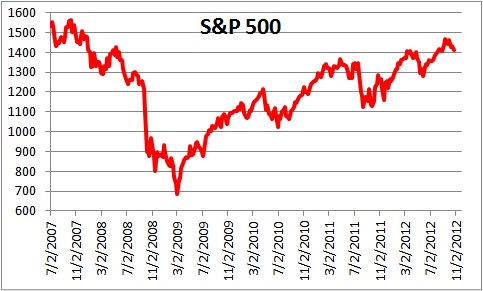
Firms have taken advantage of steadily rising stock prices to issue more stock and boost capital.
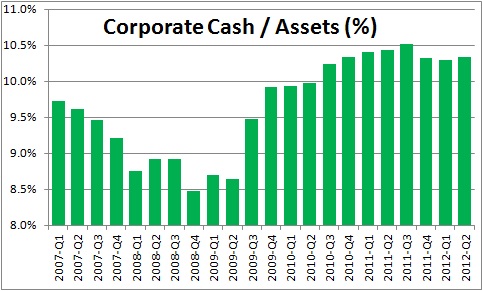
The combination of lower costs, sharply higher profit margins, debt refinancing, and additional capital has boosted corporate cash holdings to an unprecedented level.
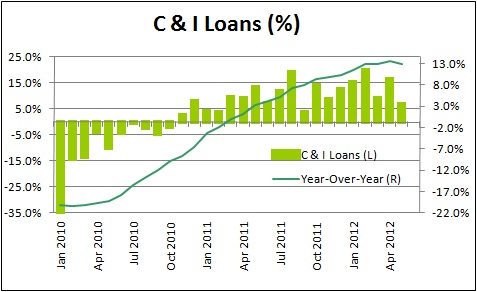
If that is not enough, credit is freely available for corporate America not only from the credit markets via commercial paper, CD’s, and corporate bonds, but from banks. Bank lending to creditworthy borrowers has grown at a steamy 13% pace during the past year.
As every budding economics student knows, the only way consumption can continue to grow is if income rises. And income can rise only if we put people back to work, which means that firms must be willing to invest and expand their payrolls.
But firms are not going to take advantage of their abundant cash and ready access to capital to hire and invest if they cannot determine the rate of return on their investment. Some uncertainty about the economic outlook, the situation in Europe, and future interest rate levels is inevitable. Businesses always deal with that type of certainty.
But today we have a federal government that is poised to drive us over a fiscal cliff, and is seemingly incapable of dealing with longer-term budget issues. This has vastly increased the normal level of uncertainty. No business today knows what its tax rates will be going forward, and firms complain endlessly about the sheer complexity of the tax code. They do not know how much it will cost them to provide health care benefits for their employees. They cannot predict the extent to which future government spending cuts or tax increases will affect their customer base. Similarly, the regulatory burden is onerous with needlessly complex compliance and permitting issues.
U.S. consumers and businesses are poised to advance. But they will not do so until our government sets aside political bickering and devises a tax, spending, and regulatory environment that reins in deficit spending and creates incentives for American businesses to hire and invest.
Stephen Slifer
NumberNomics
Charleston, SC
Follow Me