July 31, 2024
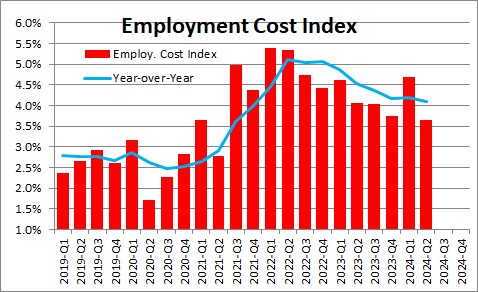
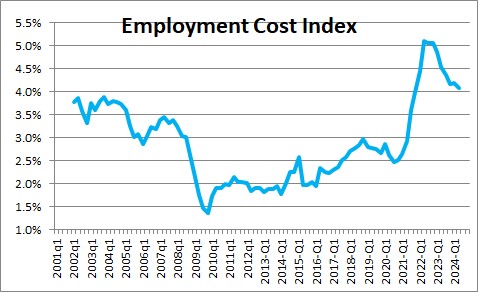
The employment cost index for civilian workers climbed at a 3.7% annual rate in the second quarter after rising 4.7% in the fist quarter. Over the course of the past year it has risen 4.1%.
With the unemployment rate currently at 4,1% and full employment presumably about 4.0%, some upward pressure on wages and benefits should continue because of the still relatively tight labor market. However, large numbers of legal and illegal immigrants are keeping wage pressures in check relative to what they would have been.
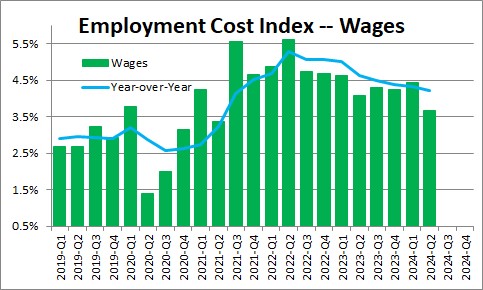
Wages climbed at a 3.7% annual rate in the second quarter after gaining 4.4% in the first quarter. Wages have risen 4.2% in the past year which continues the gradual downtrend in this series.
Benefits climbed at 3.9% pace in the second quarter after rising 4.4% in the first quarter. Over the past year benefits have risen 3.8%. The growth in benefits is edging its way lower.
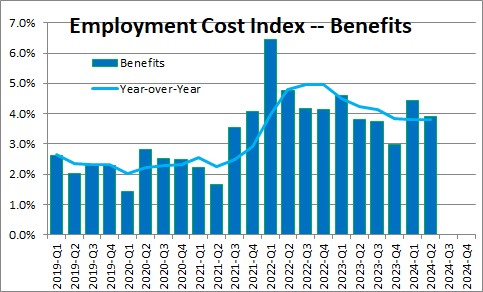
Labor costs have risen 4.1% in the past year. However, real wages declined for two years as inflation rose more quickly than wages. As a result, workers in general, as well as unions, will continue to seek sizable wage gains in the quarters ahead to make up for some of the drop in real wages.. A 4.1% increase in wages is inconsistent with the desired 2.0% inflation rate, but its rate of increase seems to be slowing..
Stephen Slifer
NumberNomics
Charleston, SC
Follow Me