
August 5, 2012
During the past two weeks the economy is showing clear signs of emerging from the spring slowdown. GDP, the stock market, employment, and housing statistics all suggest that the pace of economic activity is quickening. We anticipate second half GDP growth of 2.9% which would be in sharp contrast to the 1.8% pace recorded in the first half of the year.
GDP growth. Second quarter GDP growth came in at 1.5% which was stronger than most economists had anticipated which takes off the table the notion that the economy is slowing markedly. More importantly, many recent indicators point towards faster growth in the second half of the year.
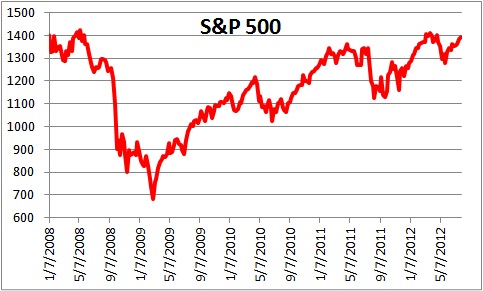
Stock market. At 1390 the S&P is 100 points higher than it was in mid-May and is within an eyelash of its highest level thus far in the cycle. The rebound in the stock market should lead to higher levels of both consumer and business confidence which, in turn, should translate into a faster pace of consumer spending and more sizeable employment gains.
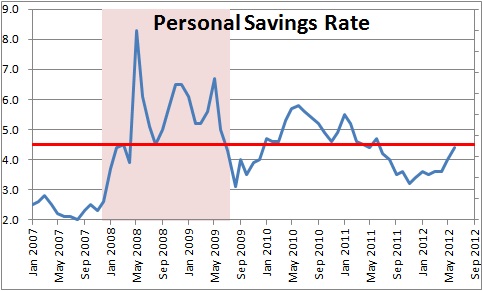
Consumer spending. The bad news is that personal consumption expenditures fell 0.1% in May and were unchanged in June. The good news is that income rose much more rapidly in those two months. As a result, the savings rate climbed by a full percentage point to 4.4%. Thus, the consumer no longer needs to curtail spending to boost savings. If consumer spending climbs to 0.2-0.3% per month, that works out to an impressive 3.0% rate of increase.
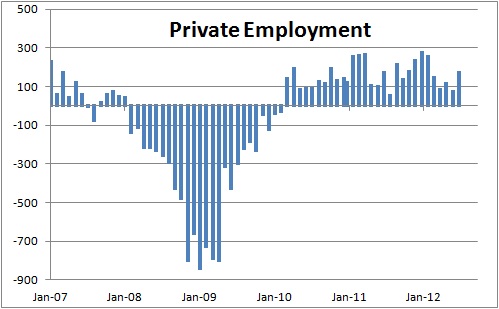
Employment. Private sector employment climbed by 172 thousand in July. That increase appears legitimate for a variety of reasons and should be a harbinger of comparable gains in the months ahead.
First, we have talked about the impact of the mild winter weather conditions for months. Sizeable increases in the early part of the year were followed by miniscule gains in the spring because much of the typical spring hiring surge occurred earlier. If that argument is correct, then monthly employment gains should return to roughly the average increase in employment during that six month period of time which was 186 thousand. ADP reported gains of roughly that size in both June and July. It took payroll employment until July to register an increase of that magnitude.
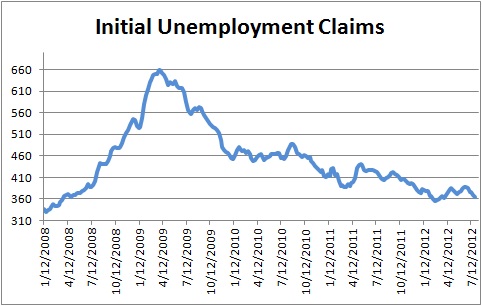
Second, initial unemployment claims, which are a measure of layoffs, have declined sharply in recent weeks. After reaching a low point of 355 thousand in late February, claims jumped to 388 thousand by mid-June as the economy lost momentum. In recent weeks the level of claims has shrunk to 366 thousand. If claims remain at this same low (or lower) level in the months ahead, employment should continue to climb by 150-200 thousand.
Those larger employment gains will boost growth in consumer income which is determined by the combination of employment, hours worked, and hourly earnings. The consumer might choose to save that additional monthly income, but because the savings rate has returned to its long run average the increase in income in this case should translate into faster spending.
From an employer’s point of view, if demand for their product picks up they have few options other than to hire more workers. The workweek is essentially back to where it was prior to the recession, so business types cannot significantly boost production by working their current employees longer hours. The same is true for overtime hours. Productivity growth has slowed sharply so they will be hard pressed to eke out efficiency gains. They will try to use temp workers where they can, but the reality is that there are not enough temps to sharply boost production in any given month. Bottom line – any increase in demand will lead to bigger gains in employment.
Housing. Virtually every housing indicator is on the upswing. The combination of a 30% drop in home prices, record low mortgage rates, and growth in income make housing today more affordable than at any time in more than 40 years. Buyers recognize that there are deals to be had. Real estate agents and builders are reporting significant gains in traffic, and some of those lookers are actually buying. The faster pace of sales has created shortages of available housing. That does two things.
First, buyers are forced to bid more aggressively for the homes that are available. Prices are also climbing because there are fewer deeply discounted foreclosures and short sales. Rising home prices should embolden other potential buyers to plunge into the market to take advantage of today’s bargain basement prices.
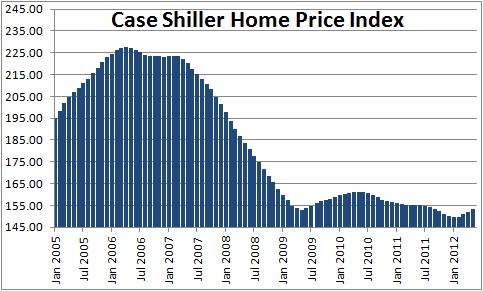
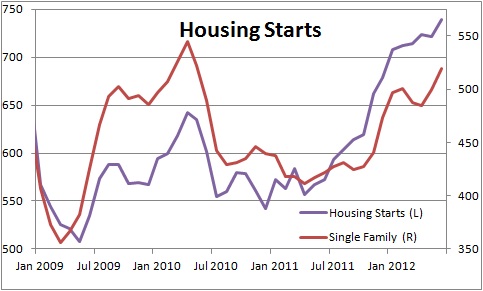
Second, builders recognize that same shortage and have jumped in quickly to build new homes and apartment buildings. Housing starts have been rising rapidly for more than a year. As the pace of construction continues to rise, those builders will need more workers which should boost employment.
We do not expect GDP growth to surge in the second half of the year, but a pickup in growth from 1.8% in the first half to 2.9% seems readily attainable.
Stephen Slifer
NumberNomics
Charleston, SC
Follow Me