
February 19, 2016
Most economists have eliminated a Fed rate hike for March, and some wonder whether the Fed will raise rates at all this year. While the drop in stock prices since the beginning of the year has been unnerving, the stock market has reversed some of its earlier decline, the economy is poised to rebound following its fourth quarter slump, oil prices appear to have hit bottom, and the inflation rate has begun to edge higher. It is still a long time between now and the next FOMC meeting on March 15-16, but our sense is that the Fed will raise the funds rate another 0.25% at that meeting. Here’s why.
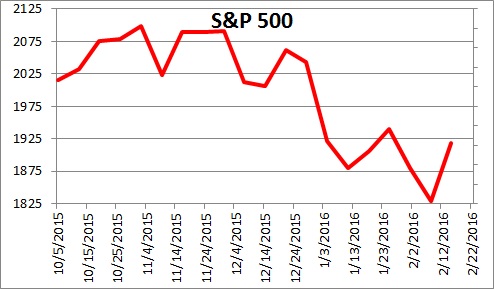
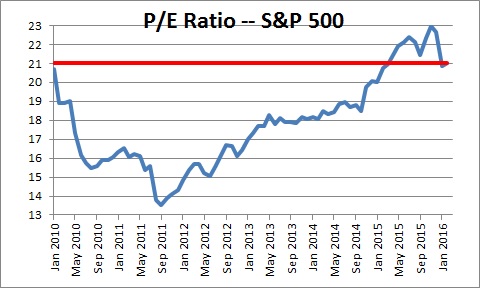
The stock market is one of a variety of financial market indicators used by the Fed. Turmoil in stock markets around the globe during January was disquieting and could have thrown the Fed off track. You will recall that the Fed postponed a rate hike in October 2015 because of unruly financial market conditions, but as global anxiety subsided it raised the funds rate in December. The S&P 500 index dropped 13% in the early part of this year before (presumably) hitting bottom on February 10. It has since rebounded by about 5%. Earlier in the year the price/earnings ratio suggested that the stock market was overvalued but it has since fallen more in line with its long-term average. Thus, we are hopeful that stock prices have finally hit bottom. That would be reassuring to the Fed.
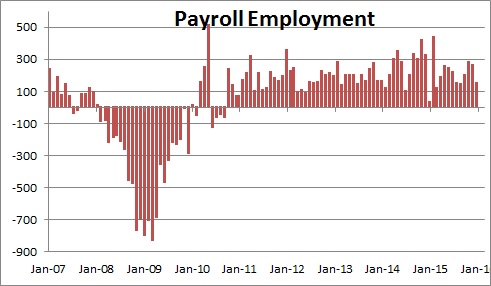
The Fed has also pays considerable attention to labor market conditions. Payroll employment rose 151 thousand in January after having climbed by 262 thousand in December. The weekly data on initial unemployment claims suggests that the February report, which will be released on March 4, will continue the 200 thousand per month trend. Strong employment gains have lowered the official unemployment rate to 4.9% which is full employment. The broadest measure of unemployment is also close to its full employment threshold. This, too, should keep the Fed on track for its second rate hike.
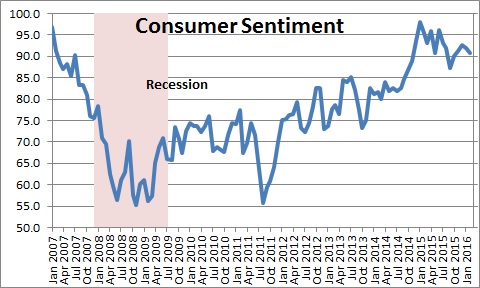
The economy has been supported recently by a solid pace of consumer spending and a strong housing market. While falling stock prices could have made consumers nervous, there is no evidence of that happening. Consumer sentiment remains solid and is just a couple of points below its high for the cycle.
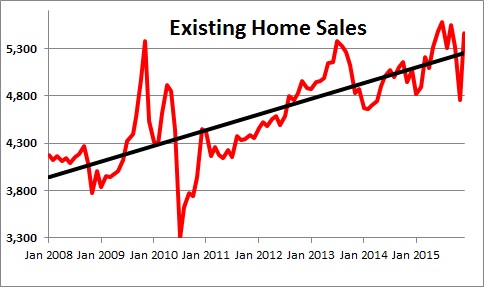
Housing and autos are the two biggest ticket items in the consumer’s budget and any emerging weakness in the economy tends to show up first in these two sectors. No sign of a problem here either. Home sales are at the fastest rate thus far in the cycle and would be even more impressive if more homes were available for sale.
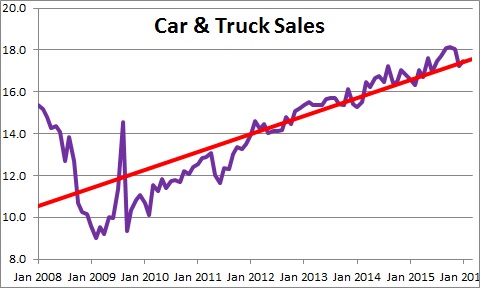
Car and truck sales are steaming along at the fastest pace in a decade.
Then there was an unexpected jump in the inflation data for January. The Fed has said it wants to see inflation move closer to its 2.0% target. It is beginning to do just that.
The CPI was unchanged in January as falling energy prices offset significant increases elsewhere. The so-called core CPI (excluding the volatile food and energy components) rose 0.3% in January — the biggest single-month increase since August 2011. Worse yet, the increase was widespread with prices of apparel, new cars, medical care, alcoholic beverages, shelter, and airlines all registering sizeable gains. The core CPI has risen 2.2% in the past year and should climb by 2.5% this year. It would appear that rising labor costs and tightness in the housing market (which is boosting rents), are finally beginning to push the core inflation rate higher.

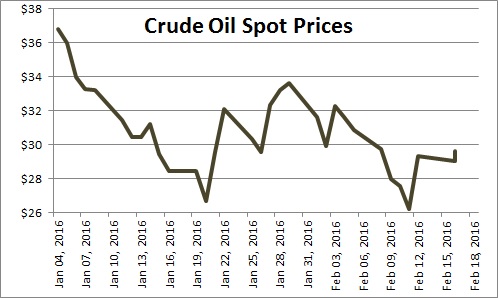
The overall CPI index has been essentially unchanged since crude oil prices began to fall in October 2014. Once oil prices level off the overall increase will quickly move back into line with the core rate. And, indeed, crude prices appear to be doing just that. After having hit bottom on February 11 at $26.19 prices have climbed close to $30.00. That is a 15% increase in a matter of days. Given the inherent volatility of oil prices that does not mean too much, but keep in mind that the Department of Energy expects oil prices to average $37.50 this year. If oil prices simply level off the CPI will quickly climb to a pace slightly higher than the Fed’s 2.0% inflation target.
So while many economists have postponed additional rate hikes this year we have not. The fact that consumer spending remains solid and the economy is rebounding following its fourth quarter slump, the labor market remains solid, and inflation is showing signs of quickening, we believe the Fed remains on track for another increase in the funds rate in March.
Stephen Slifer
NumberNomics
Charleston, SC
Follow Me