
August 2, 2013
Between revised GDP data, the July employment statistics, and the July Purchasing Managers’ index, market participants have had a lot to digest. The data seem to portray an economy that continued to expand at a moderate, but disappointing, pace in the first half. At the same time there are widespread indications that the economy will emerge from its slump in the second half of the year.
The long-awaited revision to GDP affected some data as far back as 1929. In the end it was largely a non-event. The 2008-2009 slump was slightly less deep than had been thought previously, and the rebound somewhat more robust – but in both cases the changes were minor. More importantly, GDP expanded at a 1.1% pace in the first quarter and 1.7% in the second. First half growth in 2013 was 1.4%; we had anticipated growth of 1.7-1.9%. Disappointing to be sure, but consistent with the moderate growth pattern that has been evident since the spring of last year.
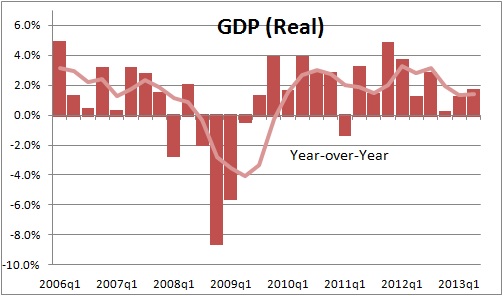
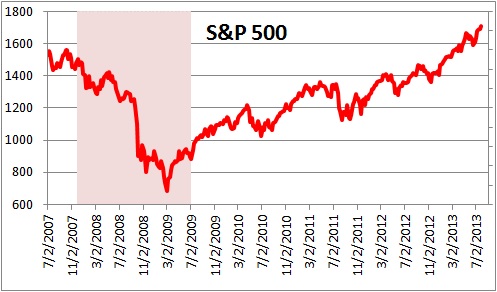
But compelling evidence is emerging that the pace will quicken in the second half of the year. The stock market sets a new high every few days. As it does so, it bolsters consumer and business confidence. And rising stock prices, in conjunction with rapidly rising home prices, lifts consumer net worth which will presumably enhance our willingness to spend.
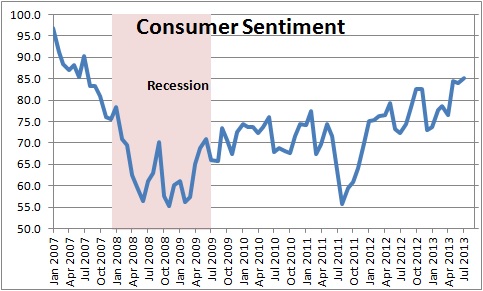
As evidence of that increased willingness to spend, car and truck sales in June and July were the strongest since the recession began in December 2007. We would not buy a big ticket item like a house or a car unless we were confident we would have a job in the months ahead and that our income was on the rise.
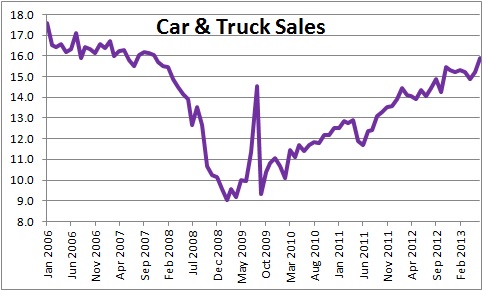
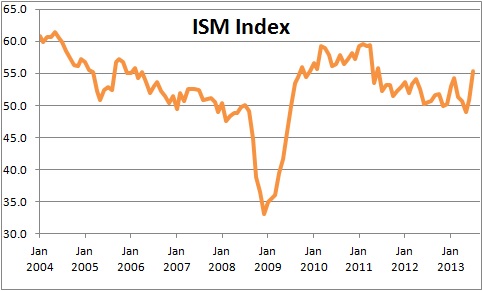
Renewed vigor in vehicle sales and in civilian aircraft are beginning to provide a lift to the manufacturing sector which has been in a year-long slump. The Institute for Supply Management Index (ISM) jumped 4.5 points in July to 55.5 which is the highest level for this index in two years. The gain was attributable to a sharp increase in orders and a significant gain in the employment component. While only a single month’s worth of data, the gain is impressive and suggests that the factory sector will contribute positively to GDP growth in the second half of this year.
In the housing sector the story is the same but becomes more impressive with each passing month. The fear was that the increase in 30-year mortgage rates would dampen buyer enthusiasm and soften housing in the second half of the year. There is little evidence to support such a theory.
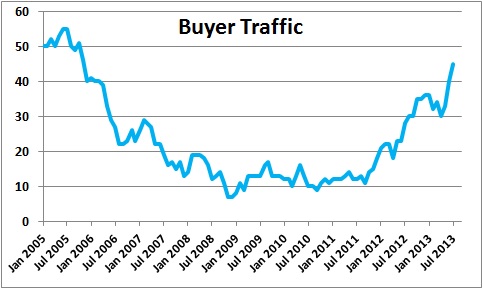
Home builders report that buyer traffic through the model homes in July continued to climb to a seven and one-half year high. Perhaps potential home owners are trying to beat the increase in mortgage rates and purchase before prices get out of reach. But perhaps not.
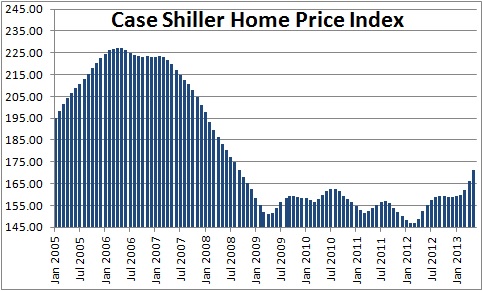
The one thing that is clear is that the newly energized housing sector has created a shortage of available homes, particularly in the $100,000-$300,000 range. That shortage of available housing has lifted home prices by 12.2% in the past year. While that is an impressive gain, the reality is that home prices remain 25% below their 2006 peak value. At the same time, mortgage rates at 4.5% are cheap by any historical standard.
Even with the 1.0% increase in the 30-year mortgage rate and sharply high home prices, the National Association of Realtors reports that a median income family has 70% more income than is necessary to purchase a median-priced home. That implies that housing will remain affordable for some time to come.
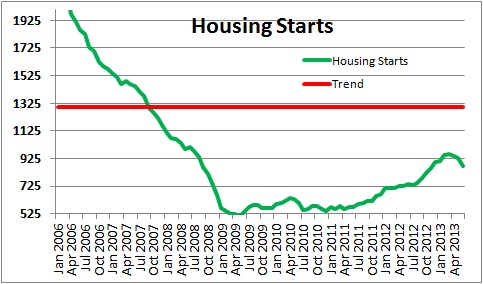
The only way to prevent home prices from rising significantly further is for builders to step up the pace of production. Currently builders are starting about 900 thousand new homes a year. But each year 1.3 million new households are formed. Each new household needs a place to live, either a house or an apartment. Thus, demand far exceeds supply. That has been the case for every year since 2007 which means that the cumulative shortfall of housing is largely responsible for the significant run-up in home prices. Builders, meanwhile, are trying to boost production, but are running into constraints in getting adequate financing from the banks which are being cautious given their 2008-2009 experience.
While the economy expanded at a less than impressive 1.5% pace in the first half of 2013, there is ample evidence to suggest that the headwinds are abating and GDP growth will quicken in the months and quarters ahead.
Stephen Slifer
NumberNomics
Charleston, SC
Follow Me