
September 5, 2014
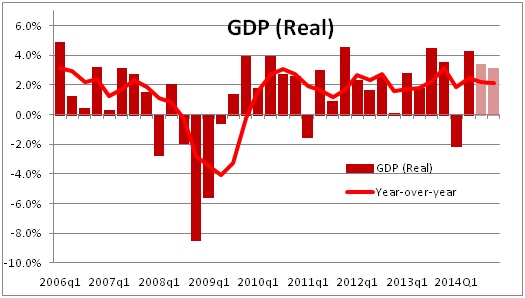
With each passing week it is becoming increasingly evident that third quarter GDP growth will exceed 3.0%. That would mean that in four out of the past five quarters GDP has registered growth of 3.0%+. Only the lousy winter interrupted this string of impressive results. Something is different. It appears to us that for the first time in five years consumers and business people are finally losing their fear and subscribing to the notion that the economy will expand at a relatively brisk pace in the quarters ahead. Recent data is hard to dismiss.
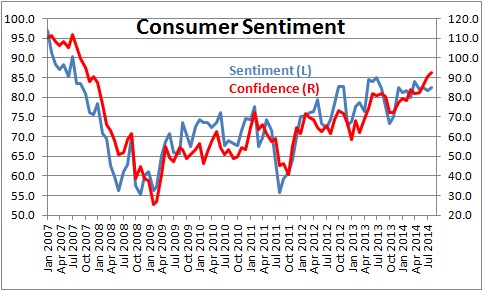
Consumer confidence continues to climb. The consumer confidence measure reported by the Conference Board it is at a seven-year high.
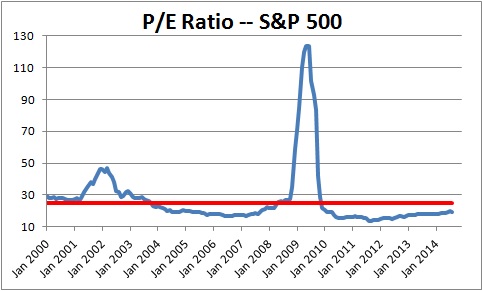
Some of this euphoria undoubtedly reflects the steady increase in stock prices. With the price/earnings ratio for the S&P 500 somewhat below its long-term average it is hard to argue that the stock market rally is unwarranted.
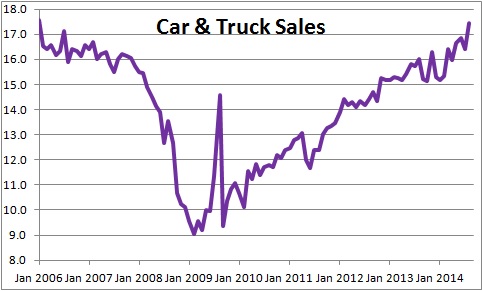
Consumers not only feel good their newfound confidence is apparently bolstering their willingness to spend. Car sales surged to a 17.4 million pace in August. Dealers have not sold cars at such a rapid rate since January 2006.
Consumers are not only buying cars they are also buying houses. After a lull late last year and into the spring of this year, home sales have risen steadily in each of the past four months.
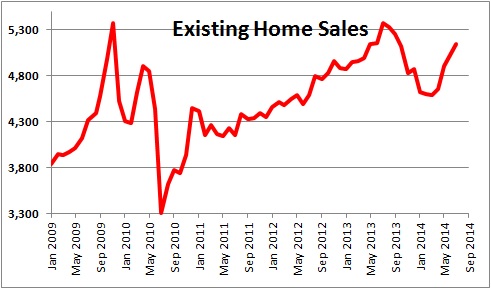
Given that the two biggest items in any consumer’s budget are housing and autos, their willingness to purchase big ticket items and borrow to finance those purchases reflects confidence that they will have a job for some time to come and that their family income will continue to climb.
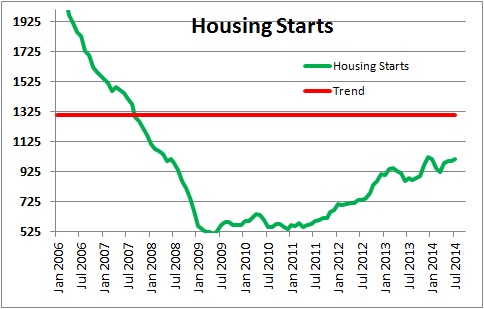
Also with respect to housing, builders have stepped up the pace of construction but housing starts continue to fall short of the 1.3 million units required to match the pace of new family formation. Given that many younger families are choosing to rent rather than buy, construction of single-family homes has risen 6% in the past year but apartment construction has surged by 34%. The construction sector will continue to expand rapidly for some time to come, but the mix is now skewed towards the construction of rental properties.
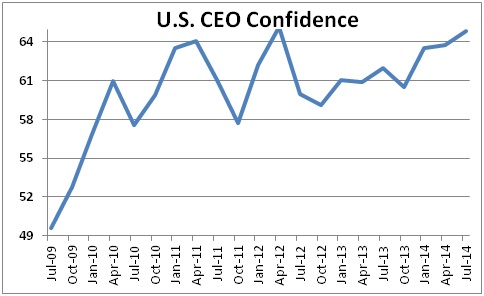
On the business side, CEO’s remain confident. Given that their earnings and stock prices continue to climb this should come as no surprise.
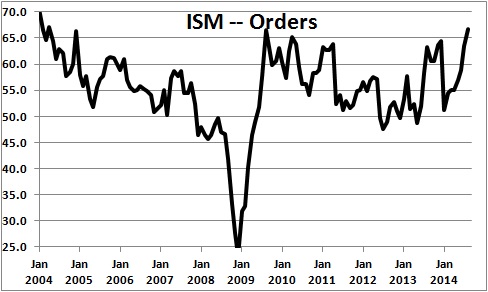
Orders are surging. A lot of the dramatic 23% increase in orders in August reflects aircraft orders, but even non-transportation related orders are climbing. In the past year they have risen 6.1%; in the past three months they have grown at twice that pace. As orders continue to climb these firms will have to boost production and hire more bodies.
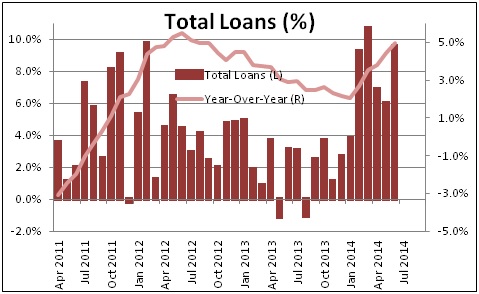
Banks have even joined the party and now seem more willing to make loans. They have been willing to make business loans for some time, but suddenly for the first time in the business cycle they are extending mortgage credit. Even consumer lending has picked up. Over the past year total loan growth has risen 5.0%, but in the past four months it has been expanding at a double-digit pace. New lending activity gives businesses the ability to refurbish their assembly line or upgrade their computer software systems. Consumers can borrow money to finance that long-delayed family vacation or to purchase a new car or surround sound system. As loan growth rises, spending accelerates.
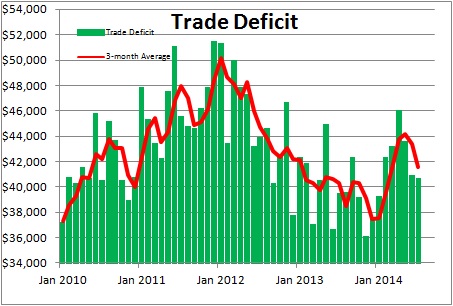
If that is not enough good news even trade is going to contribute to growth this quarter. The trade deficit shrank dramatically in June and then narrowed a bit farther in July as exports climbed while imports contracted. It is still early in the quarter but trade could boost GDP growth by almost one percent in the current quarter.
It is hard to ignore this string of good news. When we add up the bits and pieces we project GDP growth in the third quarter of 3.3%. It is still early because we will not get our first look at current quarter growth until the end of next month. A faster pace of expansion will almost certainly cause the unemployment rate to continue its descent, create at least 225 thousand jobs per month on average, and translate into more widespread labor shortages. The Fed still seems committed to an increase in the funds rate no sooner than the middle of next year, but the pressure could be building for an accelerated move.
Stephen Slifer
NumberNomics
Charleston, SC
Follow Me