
May 23, 2014
The housing sector has been hit by a variety of factors for almost a year. Mortgage rates quickly rose from 3.5% to 4.5% as the Federal Reserve announced its intention to phase out its purchases of Treasury bonds and mortgages. Home prices have been rising rapidly. Severe winter weather depressed sales sharply. As a result, existing home sales slowed from 5,380 thousand in July of last year to 4,590 thousand in March. Weather cannot be the only factor causing this significant softening in sales. What is going on? What does the future look like?
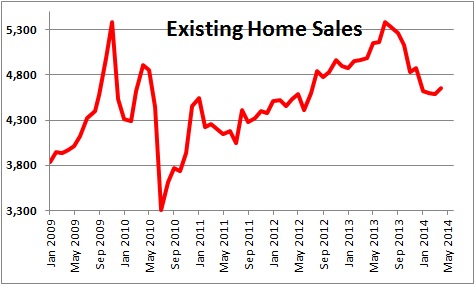
First, regarding the weather remember that existing home sales are reported at the time of closing. The modest increase in April sales reflects transactions that occurred in February and March when the weather was still an issue. Favorable spring weather should significantly boost sales in May and June but we will not see the data until June and July. We expect a significant rebound in sales in those two months.
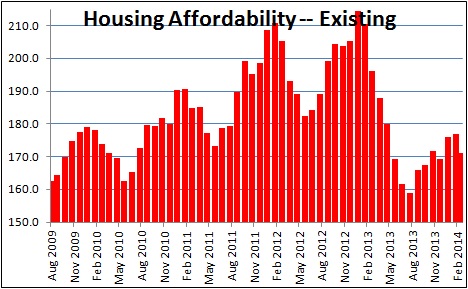
Given the combination of higher mortgage rates and significantly higher home prices housing has become less affordable because some people cannot afford the higher monthly payments. The affordability index published by the National Association of Realtors slipped from its high of 214 in January of last year to 170 in March. However, an index reading of 170 says that consumers today have 70% more income than is necessary to buy a median-priced home. While homes are less affordable than they were a year ago which has cut into sales to some extent, homeownership continues to be within reach for most borrowers.
The most important factor in reducing affordability was the dramatic increase in prices that occurred during the first half of last year. Those dramatic price gains were unsustainable and, perhaps not surprisingly, prices have retrenched in the past eight months. As a result, the year-over-year increase in price (shown in red below) has slowed from 13.5% in the middle of last year to 5.2% currently. Prices are still climbing, but at a much more manageable pace.

The most important factor causing slow sales, in our opinion, is the lack of supply. Realtors suggest that a 6-month supply of unsold homes is desirable. At that point the demand for and supply of homes are roughly in balance. But the inventory of available homes for sale has been 5.0 months or less for the past 18 months. Realtors cannot sell a property that is not listed. There can be little doubt that home sales would have been more robust if more homes were available for sale. The good news is that the inventory of unsold homes jumped 330 thousand in April which is the biggest single month increase in six years. A wider selection of available properties seems certain to boost sales in the months ahead. At the same time more options for buyers implies that home prices will only rise slowly in the months ahead.

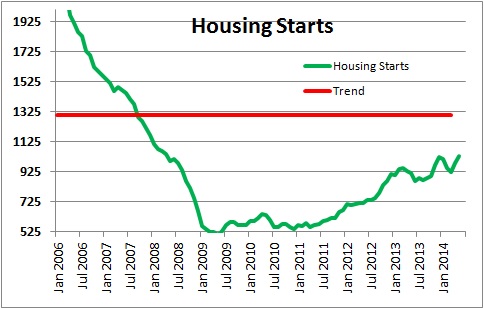
Builders significantly boosted the pace of production in April. They have finally pierced the 1.0 million market and may well get to 1.3 million by yearend. As noted above, more homes available for sale should both boost sales and limit the pace of price appreciation.
Some economists are talking about the fact that cash transactions today as a share of the total are at a record high level and interpreting that as a sign of weakness because, presumably, buyers are having difficulty attaining a mortgage. In 2012 cash transactions were 29% of all sales, in 2013 they rose to 31%, and in the first quarter of this year they climbed to 33%. Such a development is somewhat puzzling since foreclosures and short sales (which are typically cash transactions) have been steadily falling. While some borrowers may be having a financing problem, given that homes remain affordable other explanations seem more plausible. For example investors, who typically pay cash, may believe that with home prices still 20% below their peak value in 2006 and interest rates likely to remain low for some time, housing is poised for further appreciation. In addition, baby boomers are now retiring in large numbers and often downsizing to a smaller home. They may use the equity in their current home to pay cash for their new home. Alternatively, they may tap some of their newfound wealth in the stock market as the source of funds for their new home.
In short, the housing market seems likely to improve further through the end of this year. Larger employment gains will boost income and ensure that housing remains affordable. Builders are stepping up the pace of production which should bolster the supply of homes available for sale. A wider selection of available homes is certain to boost sales. The Federal Reserve will permit the 30-year mortgage rate to rise only slowly between now and yearend, probably no higher than 5.0%. And price gains have slowed which was a primary factor curtailing sales in the second half of last year. Housing may have had a rough time for the past nine months but appears on track for a significant recovery between now and yearend.
Stephen Slifer
NumberNomics
Charleston, SC
Follow Me