
October 28, 2016
The housing sector of the economy continues to expand at a moderate pace and it is likely to continue that steady expansion throughout 2017. Given the devastating impact on the economy when the housing bubble burst in 2008, it is important to scrutinize the housing industry closely to see if another bubble might be forming. We cannot see one. Instead, we believe the housing sector will expand at a sustainable pace for the foreseeable future.
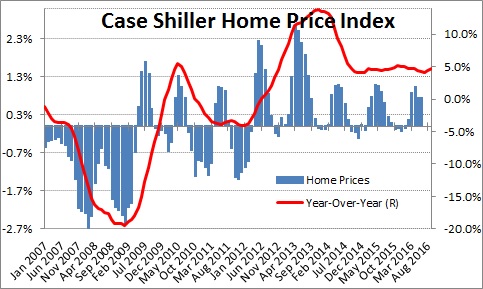
One of the first places to look for a bubble is the rate of increase in home prices. In the past year home prices have risen 4.3%. The CPI excluding the volatile food and energy components has climbed 2.2% in that same period of time. Thus, the increase in home prices does not seem excessive.
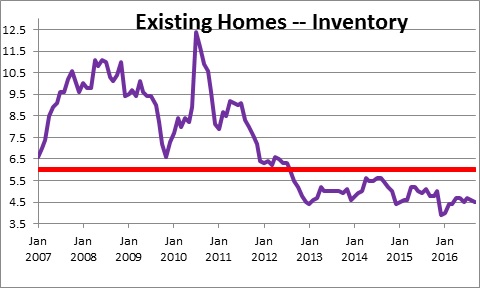
Keep in mind that homes and rental units are both in very short supply. For example, there is only a 4.5 month supply of homes available for sale at the present time. Realtors suggest that demand and supply are roughly in balance when there is a 6.0 month supply of homes on the market. In early 2007, a year before the recession actually got started, demand was beginning to sag, and builders were cranking out homes too quickly. As a result, the month’s supply of homes on the market quickly climbed to an 8.0-9.0 month supply which was an indication of trouble ahead. That is not the case today.
With home prices rising at a 4.5% pace are potential home buyers are getting priced out of the market? Absolutely not. The National Association of Realtors publishes a monthly series on housing affordability. It incorporates home prices, as well as mortgage rates and consumer income. In August that index stood at 163.5. What that means is that the median wage earner has 65% more income than is necessary to purchase a median-priced home. Just prior to the recession that index was 115.4 – the consumer had 15.4% more income than was required. At the time mortgage rates were 6.5% versus 3.5% today, and family income was lower. Lower rates and higher income help make housing affordable.
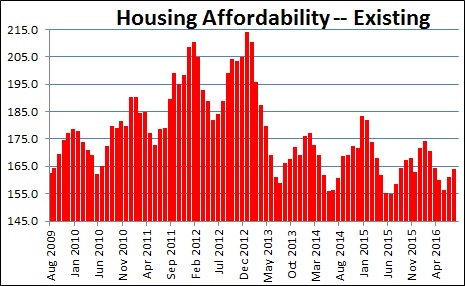
Going forward home prices will continue to rise. But, simultaneously, the economy will continue to produce a significant number of new jobs every month and wages will grow. Currently, that combo is boosting personal income at a 3.0% pace. If the Fed raises rates as slowly as it has suggested, the 30-year mortgage rate will remain below 4.0% through the end of 2017. Against that background, homes will continue to be affordable for some time to come.
Another feature of the 2008-2009 housing bubble was that credit was readily available. Congress mandated that lenders make credit more readily available to lower income families. Homes were being purchased with no down payment and no income verification. Congress believed that every American had the right to own their own home. Many of those loans were adjustable rate mortgages. When the Federal Reserve began to raise interest rates, those mortgages eventually re-priced upwards. Many of those lower income home buyers were no longer able to afford their newly-purchased home, and the bubble burst.
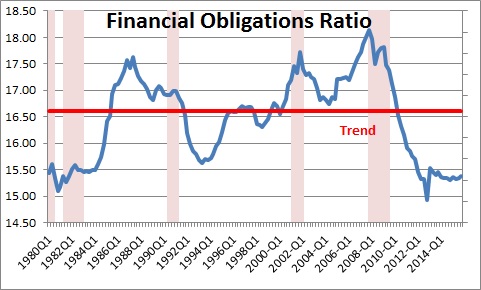
But regulatory changes have forced lenders to look far more closely at a potential borrower’s income and assets. As a result, consumers’ debt in relation to income today is the lowest it has been since the early 1980’s! Just prior to the recession that same ratio was at a record high level. Consumers were highly leveraged and exposed to any significant increase in interest rates. We know the end of that story.
To alleviate the shortage of homes on the market builders have been trying hard to boost the pace of production. But given the tight labor market they are having difficulty finding an adequate number of qualified workers. Some builders are also finding it hard to get financing. Thus, housing starts are rising but very slowly.
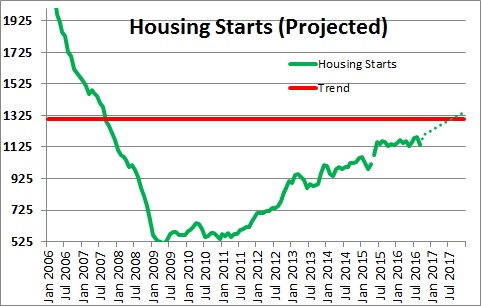
The Census Bureau tells us that 1.3 million new households are formed every year. Those families all need a place to live. At the same time housing gets old and needs to be replaced. Between those two factors housing starts need to be about 1.5 million to satisfy demand. It is to see housing starts reaching that level by the end of 2017.
In short, housing is in short supply. Home prices are rising. But family income is rising as well and mortgage rates are likely to remain very low for at least another year. Thus, housing will remain affordable for the foreseeable future. Meanwhile, consumers have little debt outstanding so they are in no danger of getting overextended. Finally, builders are gradually boosting the pace of production but demand will continue to exceed supply at least through the end of 2017. No bubble in that mix. Instead, housing appears to be on a sustainable growth track for some time to come.
Stephen Slifer
NumberNomics
Charleston, S.C.
Follow Me