
September 16, 2017
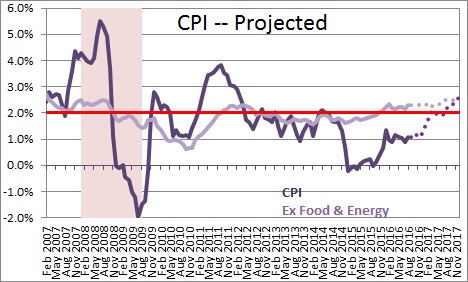
Inflationary pressures have been surprisingly subdued. But that may be changing. Health care costs are rising rapidly. A shortage of available housing is boosting rents. Oil prices have begun to climb and are expected to continue rising through the end of next year. The economy is presumably at full employment which should boost wages and put further upward pressure on prices. We expect all measures of inflation to rise gradually throughout 2017. Our fear (but not yet our projection) is that the upward pressure on inflation may be more acute than anyone – including the Fed — is currently expecting. Following a likely increase in December the Fed anticipates three additional rate hikes in 2017. A spike in the core rate could quicken the pace.
The so-called “core” CPI (which excludes the volatile food and energy components) rose 0.3% in September. During the past year the core inflation rate has risen 2.3% and has been inching its way higher, but the September increase may be a harbinger of things to come.
The primary culprit behind the September increase in the core rate of inflation was a 1.0% increase in medical care costs. During the past 12 months the cost of health care has risen 4.9%. In the past three months, however, that pace has climbed to 7.5%. That is disturbing. The September increase was led by a 1.7% increase in the hospital services index, a 1.3% increase in prescription drug prices, and a 1.1% increase in the price of health insurance. Given reports of further increases in the cost of health insurance in 2017 this part of the CPI will be subject to upward pressure for some time to come.

But wait, there is more! The cost of shelter (which includes both rents and an estimate of the cost of owner-occupied housing) rose 0.3% in September. This category has risen 3.4% in the past year but, as shown in the chart below, has been gradually trending its way higher for the past couple of years.
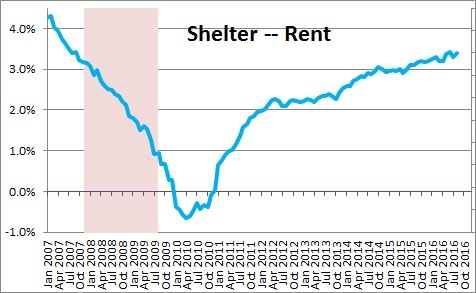
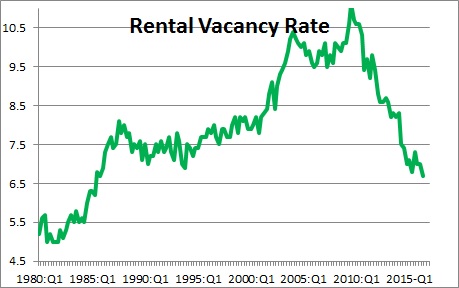
This undoubtedly reflects an acute shortage of available rental properties. The rental vacancy rate is the lowest it has been since the mid-1980s. Given that builders are having a tough time finding qualified workers, the demand for rental units is going to exceed supply for some time to come. This category should continue to trend higher in the months to come. Given that shelter represents one-third of the CPI this component is certain to put further upward pressure on the inflation rate in 2017.
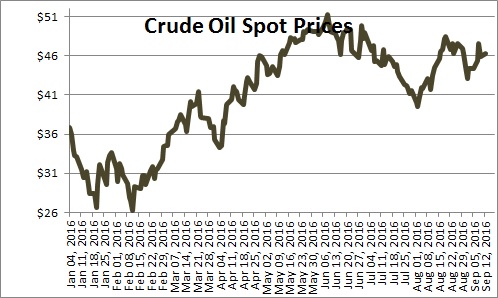
But wait, there is still more! The big drop in oil prices between mid-2014 and the end of last year not only put downward pressure on overall inflation, it spilled over into the core rate as the price of plastics, agricultural products, and transportation were biased downwards by the drop in oil prices. But after reaching a low of $26 in February crude prices have climbed to about $45. The Department of Energy expects oil prices to average $50.58 next year. That is 10% higher than the current price. Yet another factor seems likely to push the overall rate higher in 2017.
Finally, the economy seems to be at full employment. The official unemployment rate at 4.9% is roughly in line with what the Fed and most economists believe is full employment. At that point, in theory, firms have to bid more aggressively to get the workers that they need. The upward pressure on wages eventually causes prices to rise. It is not clear the extent to which this might already be filtering into the CPI, but it is clear that labor costs are rising. The employment cost index, which includes both wages and benefits, has quickened to 2.3% from slightly less than 2.0% a couple of years ago. With the economy now at full employment the upward pressure on labor costs and prices should soon escalate.

We expect the core CPI to increase 2.5% in 2017 versus 2.3% today. That is not particularly alarming but should be sufficient to keep the Fed on a path of gradual increases in the funds rate. Our fear is that once inflation begins to climb the genie is out of the bottle and it may accelerate more rapidly than anybody expects. So while the Fed expects the funds rate to reach 1.5% by the end of next year, a more rapid-than-expected climb in the core CPI could force it to quicken the pace.
Stephen Slifer
NumberNomics
Charleston, SC


But wait…you’re right on again!