
August 26, 2016
The Federal Reserve is concerned that inflation has fallen short of its 2.0% target rate for nearly five years. But those days are numbered. As inflation picks up interest rates will rise. The stock market will get hit. Investors who have been piling into stocks because interest rates have been so low will get a wake up call. While the markets have been quiet for the past two months darker economic clouds are on the horizon. We are not worried about a recession. We expect inflation to rise slowly and the Fed to respond by raising rates gradually. The problem is that the markets have concluded that low inflation and near-record low interest rates will continue for the foreseeable future. That is not going to happen.
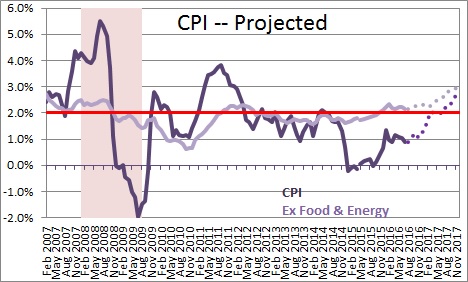
To understand why inflation might be on the rise, it is important to understand why it has been so low in the first place. The trigger for its slide was clearly the recession. During a recession, any recession – but particular the 2008-09 recession because of its depth – a couple of things happen:
- Workers get laid off. The unemployment rate rises. With so many workers competing for the few available jobs, wages fall. That puts downward pressure on inflation.
- For manufacturers the demand for their products declines so they slow the pace of production. Capacity utilization rates decline. To stimulate demand they cut prices.
In short, the economy develops considerable slack. Supply far exceeds demand. Prices fall.
Once the recovery begins, employment starts to climb and the unemployment rate begins to fall. After reaching a peak of 10.0% in early 2010, it has declined to 4.9% which is roughly in line with what most economists regard as full employment. The broader measure of unemployment is similarly close to the full employment mark. Slack in the labor market has disappeared.
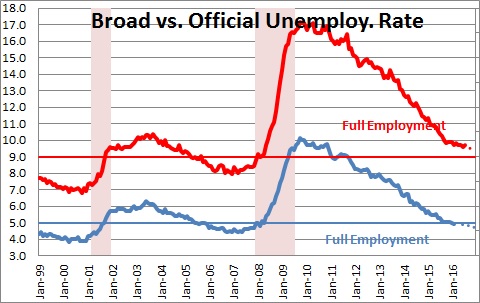
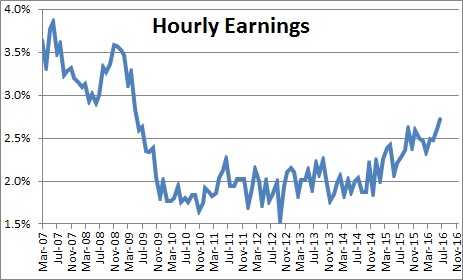
We believe that we are at full employment because employers are reporting increasing difficulty finding an adequate supply of skilled workers. To attract the workers they need they have begun to bid up wages.
Following its slump last year factory output has begun to climb and the utilization rate is approaching full capacity. Once that happens manufacturers tend to raise prices.

One reason the manufacturing sector has not picked up more quickly is because growth in China has been slowing for several years. That reduces growth in every country in Asia. More recently, the Brexit vote has clouded the economic outlook for Europe. As a result, investors in both Europe and Asia have been flooding into the U.S. where GDP growth was expected to be more robust than elsewhere. That caused the dollar to rise more than 20% between mid-2014 and the end of last year.
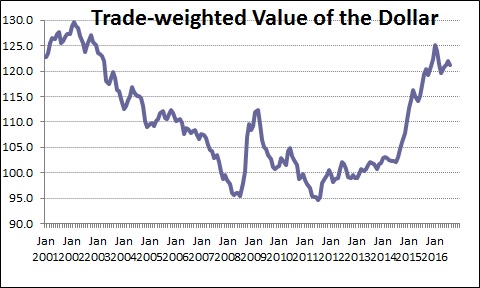
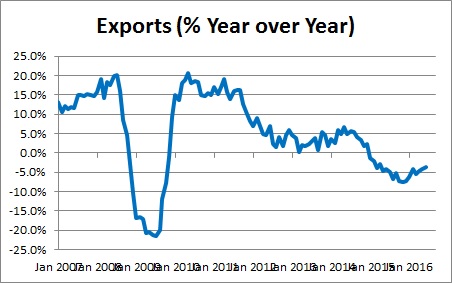
As that occurs two things happen. First, U.S. goods become more expensive for foreigners to purchase. That reduces the growth rate of exports. Indeed, exports fell 7% last year. That weighed heavily on the factory sector. But since the beginning of the year the dollar has declined by about 4.0%. In the last three months exports have actually risen at a 6.0% pace. Thus, the drag on manufacturing caused by the dollar’s strength is over. The rise in the value of the dollar means that the prices of imported products decline. That has pushed the inflation rate lower. But now that downward bias to inflation has also disappeared.
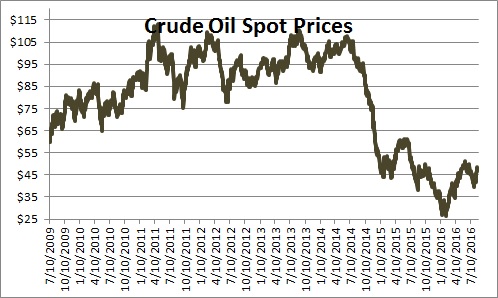
In addition to all the above factors, U.S. oil output doubled in the past seven years as the result of technological developments in the form of fracking and horizontal drilling. As a result, crude oil prices collapsed from $107 per barrel in mid-2014 to a low of $26 per barrel. But drillers have cut production enough that the price of crude oil has climbed from its January low of $26 to about $46 per barrel. The downward bias to inflation from falling oil prices has come to an end.
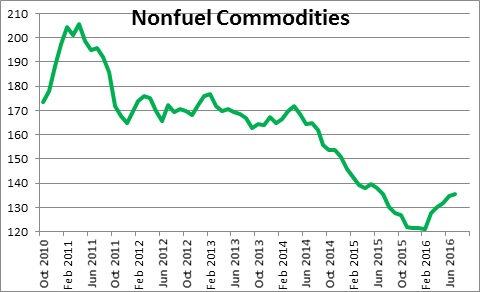
Non-energy commodity prices such as lead, copper, aluminum, zinc, gold, silver, and agricultural products also fell sharply between mid-2014 and the end of last year. There is a very close inverse relationship between commodity goods prices and the dollar. As the dollar rises, the prices of commodities declines. But since the beginning of the year the dollar has reversed course and fallen in value, and commodity goods prices have turned upwards.
Thus, everywhere we look are signs that the inflation rate is poised to turn upwards. The tightness in the labor market is boosting wages. The lack of slack in the manufacturing sector will soon tempt manufacturers to raise prices. The downward bias to inflation caused by the strength of the dollar has disappeared. Oil prices are no longer falling. Nonfuel commodity prices have turned upwards.
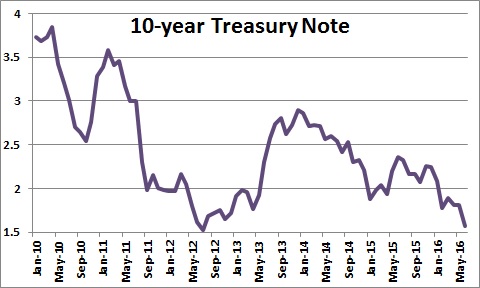
Inflation is on the rise. By the end of the year it will be at or above the Fed’s target. While Fed officials seem willing to let inflation run above target for a while, they need to guard against the possibility that inflation suddenly takes off. To prevent that the Fed will need to keep short rates moving steadily upwards. Unfortunately, that is not what the markets expect. Long-term interest rates are at a record low level. The 10-year note is at 1.56%. It is not going to stay there. It will move higher. The bond market has become too comfortable with the notion that inflation is going to remain in check for a protracted period of time.
The combination of record low interest rates together with a perception that the Fed will keep rates low for years has pushed investors into the U.S. stock market. As a result, the price/earnings ratio has risen far above its long-term average. As market participants come to recognize that inflation is on the rise and the Fed is going to push rates higher, the stock market will hit a significant bump in the road.
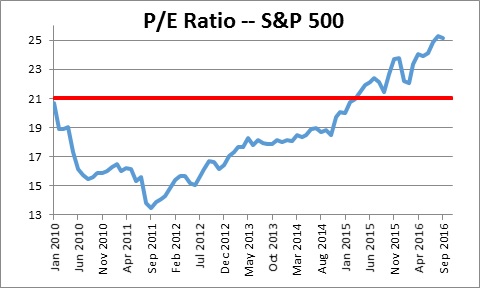
The point is that the markets have become way too comfortable in recent months. That is not going to last. September and October are, historically, times of the year where bad things happen in the stock market. This year should be no exception. None of this suggests that the economy is about to fall back into recession. Rather, the stock and bond markets have gotten way too complacent. They will soon encounter a dose of reality.
Stephen Slifer
NumberNomics
Charleston, S.C.


Thanks. You make it perfectly clear.