July 24, 2024
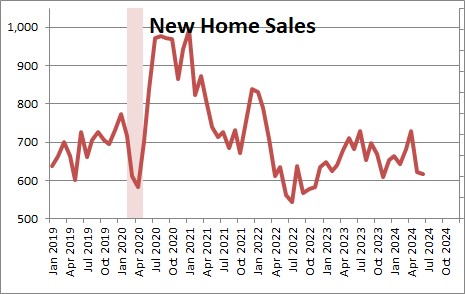
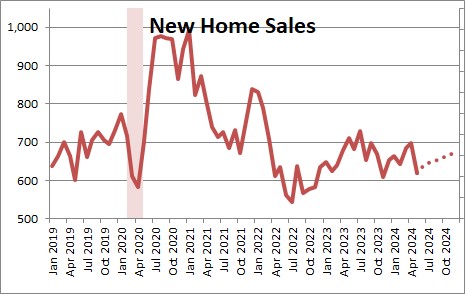
New home sales edged lower by 0.6% in June to 617 thousand after having plunged by 14.9% in May. New home sales had been stick in a range from 625-700 thousand for some time, but the pace of sales has fallen off markedly in the past two months to about 620 thousand.
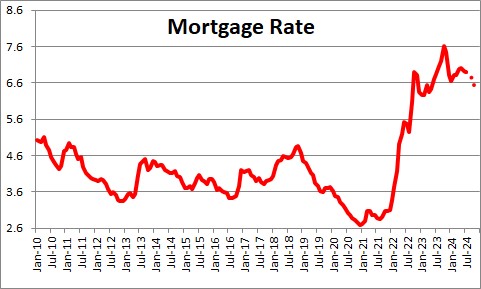
After having peaked at 7.6% mortgage rates have fallen to 6.8%. As inflation continues to subside slowly in 2024 mortgage rates should continue to decline to perhaps 6.6% by the end of this year.
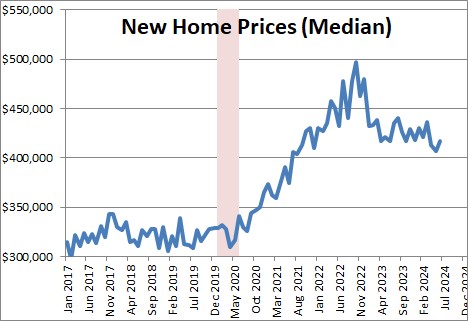
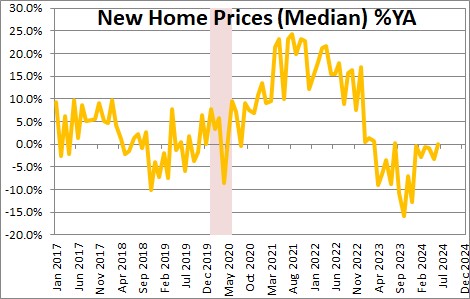
Home prices rose rose 2.5% in June to $417,300 after having declined 1.6% in May. Over the past year Over the past year new home prices have fallen 0.1%.
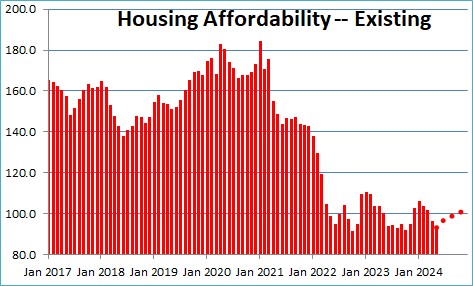
Housing affordability fell rapidly in 2021 and 2022 as mortgage rates and home prices climbed sharply. It currently stands at 93.1 which means that median-income earning consumers had 6.9% less income than is required to purchase a median-priced home. If mortgage rates decline somewhat in 2024 as inflation subsides, home prices rise slowly, and income continues to climb, affordability should rise somewhat later this year and that median income earning family should have at least enough income to purchase a median-priced home.. This should provide some mild stimulus for both new and existing home sales.
As a result, we look for new home sales to rise from 617 thousand currently to 650 thousand or so by the end of 2024.
Stephen Slifer
NumberNomics
Charleston, SC


Enjoyed your presentation today AND very well attended!
One idea that I have read lately, is changing the actual goal for inflation from the stated 2.5% to something higher. Apparently the reasoning is that the 2.5% is outdated and does not take into account our current economic environment.
Wanted to get your assessment of that possibility, so the Fed would actually change the goal?
Thanks!
Hi Richard,
First of all, thanks for coming. I, too, was pleased with the turnout. These people keep coming back year after year. The corporate tables sold out in 24 hours. I am flattered by the fact that so many people are interested.
There has been discussion about raising the desired rate of inflation from 2.0% to something higher. That is possible but, in my view, that is unlikely to happen. Inflation is a like a tax. It erodes purchasing power (as we have seen lately). If inflation goes up, workers will demand higher wages to compensate. So instead of having to lobby for a 2.0% pay hike every year, now people will have to lobby for 3.5% wage gains each year to just stay even (i.e., for real wages to stay the same. If inflation rises, interest rates will be higher (bond investors usually want a return of some amount above the inflation rate). If interest rates rise, it costs the government more to finance its debt. I personally think it is a bad idea.
And re: the fact that a 2.0% inflation target is outdated. Why exactly is that? The Fed did not have a problem keeping it at or below 2.0% for the past 20 years. It wasn’t long ago that the Fed was worried that the inflation rate was too LOW. It has jumped the past two years because of all those problems I mentioned at the conference. The Fed started raising rates in March of this year which, I think, was about 18 months too late. They let the problem get out hand. And we were adding more fuel to the fire in January and March of 2022 with additional fiscal stimulus when the recession ended in April 2020. Remember the chart re: the total amount of stimulus? $9.5 trillion of stimulus to fix a $2.2.trillion GDP shortfall. I don’t think the Fed should be fiddling with its target, it should do a better job of carrying out its policy.