
December 11, 2015
Just when it appeared that crude oil prices were hitting bottom they quickly plunged from $42 per barrel to $36. What is going on? What might this imply for GDP growth in the quarters ahead? The answer depends upon how long prices remain at this level.
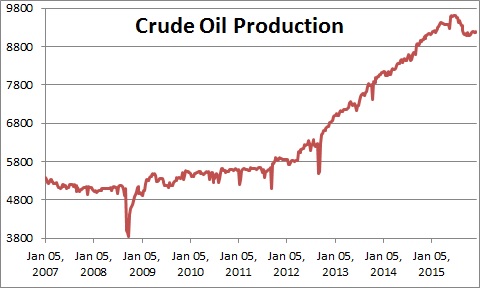
The world is literally awash in surplus oil. That situation has been created by a combination of factors. First, hydraulic fracturing has essentially doubled crude oil production in the U.S. in the past seven years.
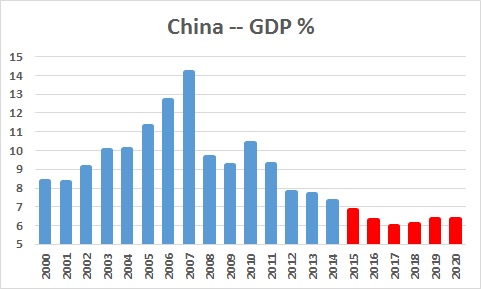
Second, GDP growth in China has slipped from a double-digit pace a few years ago to 6.8% this year. Given that China is the world’s second largest economy a slowdown of that magnitude has reduced the demand for oil and a wide variety of other commodities everywhere.
Third, OPEC recently decided to effectively scrap production targets. That became the catalyst for the most recent 15% drop to $36.
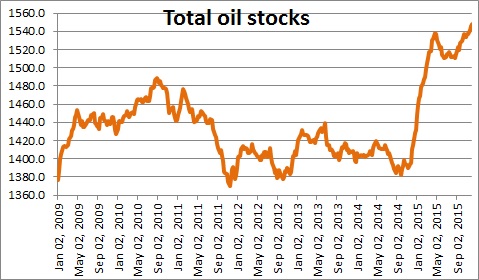
This combination of increased supply and reduced demand has caused oil inventories to climb to a record high level around the globe. That situation will not change for some time to come for several reasons.
The oil industry has been turned topsy-turvy by technological advancements in the U.S. which have dramatically and permanently increased the global supply of oil.
GDP growth in the U.S. is likely to be steady in a range from 2.0-2.3% for the foreseeable future. China’s GDP growth is expected to slow a bit farther. GDP growth in Europe will continue to slog along at about 1.5%. Japan’s growth in coming years should be 1.0% or a bit less. Thus, there is little expectation that the global demand for oil will pick up any time soon.
Led by Saudi Arabia, OPEC’s decision not to cut output in an attempt to maintain market share rather than cut production to boost prices could be temporary. However, the disarray within OPEC is compounded by the expectation of a significant increase in production once Iran completes the deal to lift sanctions and restores exports. So while OPEC’s decision to maintain production could ultimately be reversed, at the moment it appears to be rather long-lasting.
What this means is that the imbalance between the supply of and demand for oil will not change any time soon. In our opinion oil prices will no longer trade between $80-110 per barrel but, instead, will trade in a much lower range from $30-60.
Why such a broad range? Primarily because there is a very strong intra-yearly pattern for oil prices. In general, they rise in the first half of the year and decline in the second half. This seasonal pattern is attributable to the summer driving season where demand reaches a peak sometime around the July 4th holiday and fades in the second half of the year.
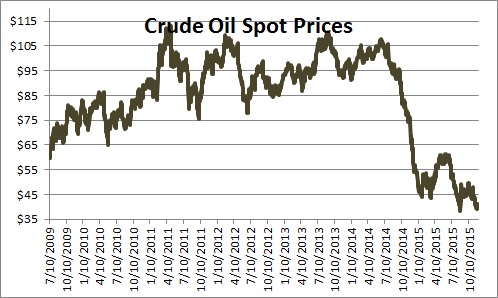
For example, this past year oil prices reached a low of $46 in mid-January and subsequently climbed to $61 by mid-June. In 2014 prices slipped to $91 in early January and then climbed to a high of $107 per barrel in early June. This happens every year. What this suggests to us is that oil prices of $36 per barrel currently should hit a seasonal low within a few weeks. By June prices should have climbed to perhaps $45 – before once again beginning to decline in the second half of 2016.
Oil market participants have been horrified by the recent drop to $36. If oil prices remain at that level activity in the oil patch will continue to contract and subtract several tenths of a percentage point from GDP growth in the first half of the year. But if oil prices quickly return to $45 the industry will stabilize.
Keep in mind that the (so-called) experts in the oil market expect prices to average $50 next year. If that is accurate then the rebound in the first half of the year may be more pronounced and actually boost GDP growth next year. But beware, that this panel of experts has steadily ratcheted downwards their forecasts throughout 2015.
Finally, crude oil prices averaged $93 per barrel in 2014 and $49 this year – a drop of almost 50% — and that has reduced GDP growth this year by perhaps 0.5%. If oil prices average $50 in 2016, or even $40, the bulk of the decline in oil prices – and its subsequent negative impact on GDP growth – has already occurred. Thus, our conclusion is that the recent drop in prices to $36 may not be very long-lasting or significant.
Stephen Slifer
NumberNomics
Charleston, SC
Follow Me