
February 4, 2011
As we move into the early part of 2011, the pace of economic activity seems to have quickened significantly. Virtually all recently released economic statistics are consistent with that conclusion.
One indicator that seems a bit anemic is GDP. The Commerce Department reported in late January that fourth quarter growth was 3.1%. That was significantly less than the 5.0% pace we had expected. But, upon closer examination, the data were not nearly as weak as they appeared at first blush. Final sales in the fourth quarter rose at a sizzling 6.9% pace. That represents what consumers and businesses actually purchased in the fourth quarter. Our spending literally took inventory off the shelves. But now, inventory levels are too lean relative to sales and will have to be rebuilt. As firms do that, it will add to GDP growth in the first couple of quarters of this year. We currently expect first quarter GDP growth of 5.0%
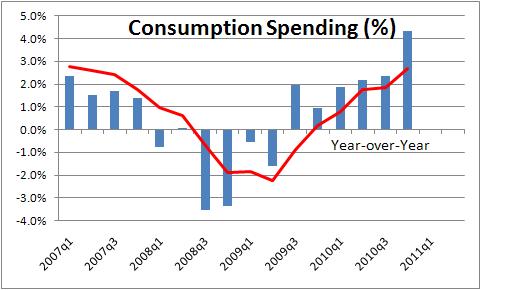
To highlight this point look at the pace of consumer spending. It climbed 4.3% in the fourth quarter which is double the pace reported for the first three quarters of last year.
That should not be a great surprise. There are many reasons why consumers are beginning to open their wallets.
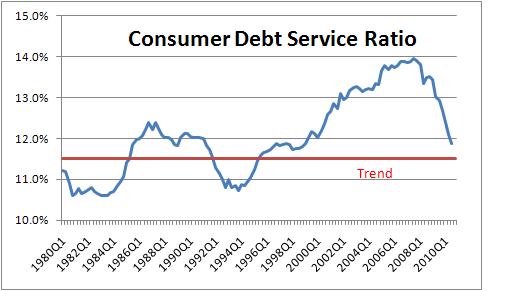
1. Consumers have paid down huge amounts of debt over the past couple of years and now have a debt burden in line with the 30-year average. Going forward consumers can continue to pay down debt, but instead of paying off $500 per month they could pay off $200, which would leave them with the remaining $300 to spend each month.
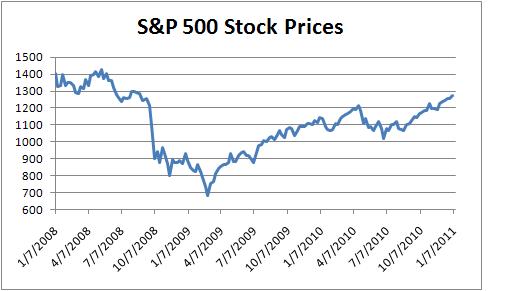
2. The continuing rise in the stock market has restored about one-third of the wealth that was lost during the recession.
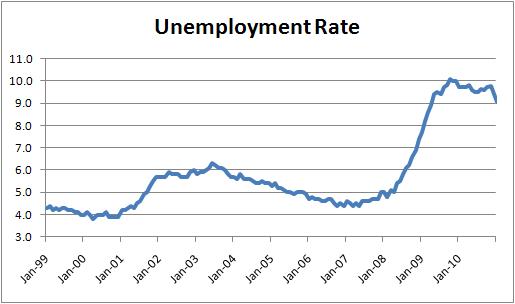
3. The unemployment rate has declined 0.8% in the past two months to 9.0%. While still high, it gives many unemployed workers hope that they might actually be able to find a job. Consumer confidence should climb further.
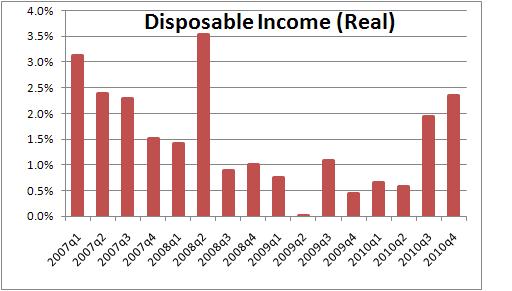
4. Income is rising. While firms may not have hired many workers up to this point, they have been working people longer hours. They have to pay them for those hours. As a result, income is now growing at about the same pace that it was prior to recession.
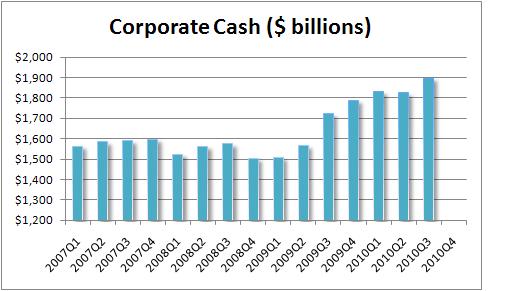
Businesses, too, are going to quicken their pace of spending this year. Look at what has been happening recently to corporate profits.

During the recession they spent huge amounts of money on technology in an effort to boost productivity. That spending paid off in spades. Productivity surged and corporate profits skyrocketed. Indeed, many of those profits are still sitting around on corporate balance sheets in the form of cash. That cash is not going to sit there for long. Firms may choose to spend more money on research or technology, they may gobble up the competition, or they may boost dividends. In some way, shape, or form that money will get spent and further stimulate the economy.
But, you might ask, firms are not hiring. We need jobs. True. But they are coming. Think about it this way. If GDP growth is humming along at a 2.5% pace, and productivity is rising at 2.5%, firms can produce all the goods and services they need without hiring anyone. But if GDP growth suddenly escalates to 4.0%, as appears to be the case currently, and at the same time productivity growth slows a bit to 2.0%, (which is also happening), then business people need to boost employment by 2.0% to make up the difference. If you work through the math that suggests payroll employment should soon begin to climb by 200-250 thousand per month. If you think that projected increase in employment might be too optimistic, check out this chart.
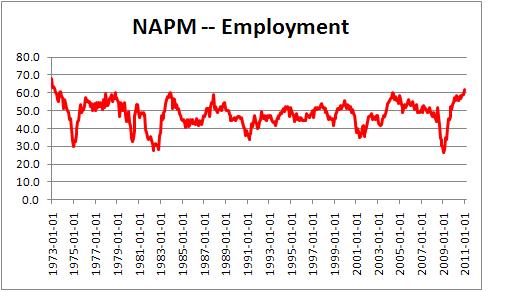
The Institute for Supply Management every month produces various indexes of conditions in the manufacturing sector. Amongst the items surveyed is the outlook for employment. The January employment index rose to its highest level since 1973. At that time employment gains were averaging 200-250 thousand a month. Jobs are on the way!
The economic outlook continues to brighten with each passing month.
Stephen Slifer
NumberNomics
Charleston, SC
Follow Me