
December 22, 2011
This year the American people may receive the best Christmas present of all thanks to the long-anticipated rebound inhousing – faster growth in the economy, more jobs, and more income. Virtually every housing sector indicator has begun to turn upwards.
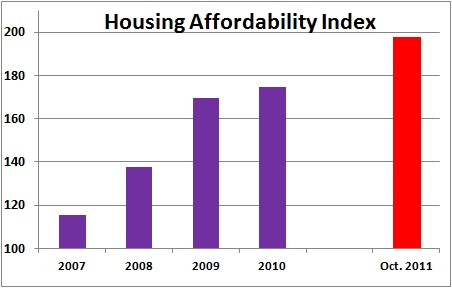
We have been arguing for some time that the slump in housing would soon end. With home prices 30% lower than they were three years ago, mortgage rates at a record low level of 4.0%, and the economy finally beginning to produce jobs which boost income, we believed that the foundation was being laid for a vigorous rebound in housing. These factors combined make housing more affordable today than at any time in the past 40 years.
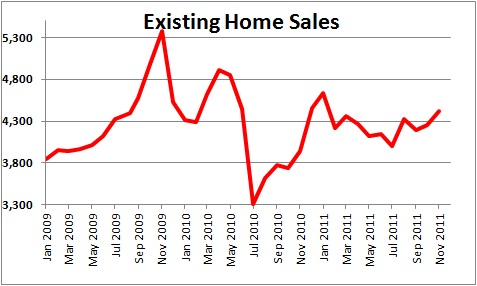
Recently released data on existing home sales indicate that sales climbed 4.0% in November which represents the third increase in the past four months. Those sales are now 12.3% higher than they were at this time last year. Buyers are no longer just sniffing around – they are actually doing something to take advantage of greatly reduced prices and record low mortgage rates.
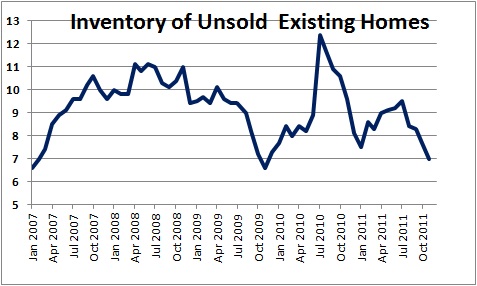
Some will argue that the glut of unsold homes will keep the housing market depressed for some time to come. Think again. The faster sales pace in November reduced the backlog of unsold existing homes to 7.0 months. With the exception of a single month in 2009, this is the smallest inventory of unsold homes since January 2007 – about a year before the onset of recession.
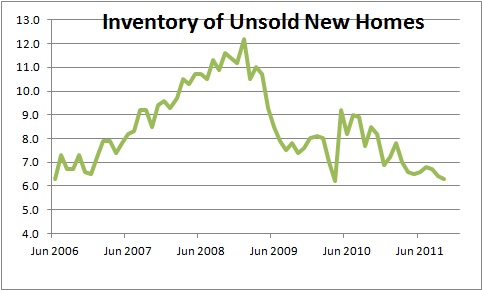
The backlog of new homes is equally lean. At 6.3 months the glut of unsold new homes is the lowest since the middle of 2006 – 18 months before the economy plunged into recession.
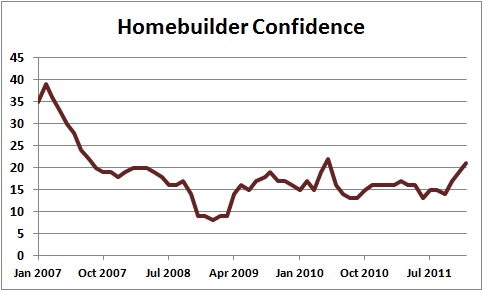
We also recently learned that homebuilder confidence rose in December – its third consecutive increase. With the sole exception of a single month in mid-2010, homebuilders have not been so confident since August 2007 – prior to the onset of recession.
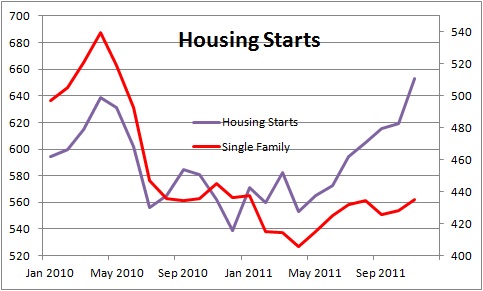
Then, we got data on housing starts which jumped sharply in November, the second big gain in the past three months. To smooth out the inherent monthly volatility it is best to look at a three month average. On that basis housing starts at 653 thousand are the fastest in three years — since December 2008 to be exact. While the upswing has been dominated by the construction of apartment buildings rather than single-family homes, the reality is that for the first time in years the construction industry is showing signs of life.
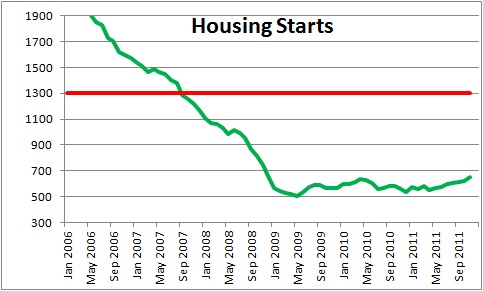
It is also important to recognize that residential construction today is operating at a pace that is well below what is necessary to satisfy the demand from housing stemming from growth in the population. The Census Bureau tells us that there are 1.3 million new households formed each year. They need some place to live, either a single-family home or an apartment building. Thus, over the next year or two, housing starts need to climb to 1.3 million units or about double the current pace of 653 thousand. No wonder builders are feeling confident!
Why is all this so important? First of all, it will boost GDP growth in 2012. The housing sector represents about 15% of the economy. That comes about from both the construction of new homes and apartment buildings, and through consumer spending on housing services such as rent and utility payments. If one were to add in purchases of new furniture and appliances it would be a couple of percentage points higher. Our 3.0% GDP forecast for 2012 assumes a modest rebound in housing. A more vigorous recovery could tack on an additional 0.3-0.5%.
Second, it will create jobs. At the height of the recession the construction industry was losing 125 thousand jobs per month and it is still falling by about 15 thousand per month. It is easy to envision the creation of 25 thousand (or more) jobs per month if the industry really is turning itself around. That factor alone would boost private sector employment from 160 thousand per month currently to 200 thousand.
As we see it, the housing sector rebound has begun. Builders have begun to recognize the severe shortage of housing and responded accordingly. Buyers are beginning to recognize the value in housing and are also getting on board. It’s about time!
Stephen Slifer
NumberNomics
Charleston, SC
Follow Me