
October 1, 2013
The Treasury will not be able to pay its bills if the ceiling on debt is not raised by mid-October or shortly thereafter. As is typically the case, the press paints a very disturbing picture of what will happen if that does not happen. But rest assured the Treasury is not going to default on its debt.
A default by the Treasury would be unthinkable. If it becomes unable to pay its debts, the Treasury would have to pay a higher interest rate on future debt because investors – both foreign and domestic — would demand higher interest rates given the possibility of default. Confidence in U.S. Treasury debt as a safe haven in times of uncertainty would be shaken. Foreign investors could reduce their willingness to buy U.S. debt.
But the Treasury is not going to default. Why? Because the President and members of Congress are well aware of the potential adverse consequences of such a development.
Raising the debt limit has become a common event. It has been raised 68 times since 1960, 14 of which occurred between 2001 and 2013 and the Treasury has never defaulted on its debt. And it is not going to happen this year.
Having said that, negotiations will continue right up to the last minute and make all of us nervous in the meantime because, perhaps, this time could be different.
The last time the debt ceiling was increased was August 2, 2011. A bitter debate and apparent unwillingness to compromise raged right up to the last minute. During that period of time consumer and business confidence plunged.
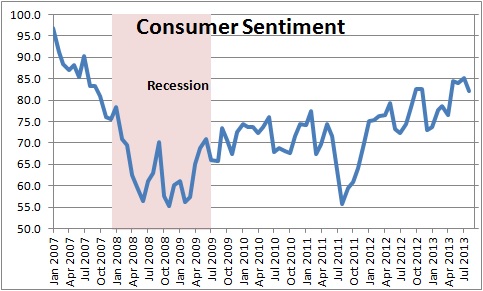
Three days later S&P downgraded U.S. debt one notch from AAA to AA+. That caused the stock market to decline 635 points in a single day. GDP growth in the third quarter of that year slipped to 1.1%.
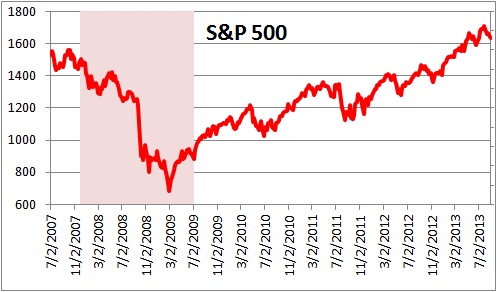
But once an agreement was reached, what happened? The stock market rebounded and six months later set another record high level. Consumer confidence quickly regained what had been lost. And fourth quarter GDP growth rebounded to 4.8%. So while there were some temporary effects from the debate, there was no permanent damage.
But something else happened that many people have forgotten. The compromise that was reached to raise the debt limit contained $2.3 trillion of budget cuts over 10 years, and put in place a mechanism – the budget sequester that first went into effect in March of this year – that would produce another $1.2 trillion of spending cuts over 10 years for a total of $3.5 trillion. The debate highlighted that government spending was on an unsustainable path and needed to be curtailed. So while the debt ceiling debate in 2011 produced some undesirable short-term effects, in the end it altered the course of government spending. In 2011 the budget deficit was $1.2 trillion. This year, in 2013, it will be about $0.6 trillion. It should be slightly smaller next year.
This time the debate is about the future of Obamacare and not government spending. And while the solution to the problem is not yet in sight, the debt ceiling debate may once again produce some ultimately favorable results. Stay calm and forget about a default.
Stephen Slifer
NumberNomics
Charleston, SC
Follow Me