
September 4, 2010
During the summer months the doom and gloom crowd enjoyed their moment in the sunshine. Double dips and deflation were all in vogue. Even the Fed got into worry mode. But once summer ended, the clouds lifted and the economic outlook brightened considerably for a variety of reasons.
Let’s start with the consumer. There is a perception that American consumers are not spending. That is not quite accurate. We are spending, but a large portion of those purchases are on imported products. While sales of U.S.-made goods have been sluggish, total spending – i.e., purchases of both U.S. made and imported goods –seems to be accelerating.
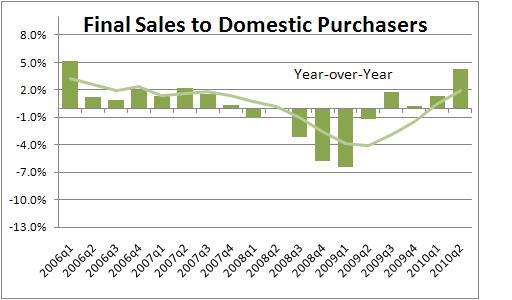
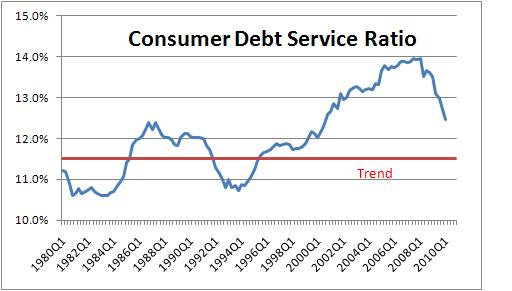
Why? Part of the answer lies in the fact that we have had sufficient income growth in the past year to simultaneously pay down a sizeable chunk of our outstanding debt, boost savings, and have enough money left over to spend at a moderate pace. The percent of our income being used to service debt has fallen from 14.0% at its peak to about 12.5% currently, and is quickly closing in on the 11.5% level that has been its average over the past 30 years. We are slowly becoming more comfortable with our debt burden.
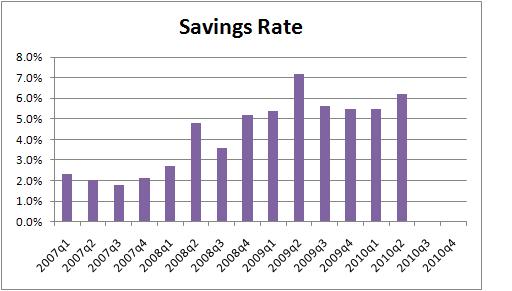
At the same time that we have been paying down debt, the savings rate has climbed from 2% a couple of years ago to more than 6.0%. That provides us with the fuel to quicken our pace of spending in the months and quarters ahead if we so choose. Given all of this, consumers are in far better shape today than they were a year or so ago, and a gradual acceleration in spending seems likely.
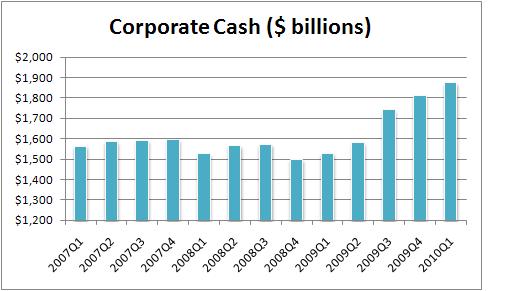
What about businesses? Previously we have talked about how corporations have become more efficient in the past two years. They laid off hundreds of thousands of workers during the recession and spent billions of dollars on equipment designed to boost productivity. It has paid off big time! Corporate profits have soared in the past year and, as a result, American firms have accumulated an unprecedented wad of cash. They are not going to sit on that money for long. They have many choices all of which will benefit the economy going forward. They might use it to buy up the competition and, indeed, merger activity has been soaring. They might buy back some of their own stock. Or they might spend more on productivity-enhancing equipment – since it has proven to be so beneficial to their bottom line during the past year. All of these alternatives will boost earnings and propel the stock market higher. As that occurs, wealth lost during the recession will continue to be restored.
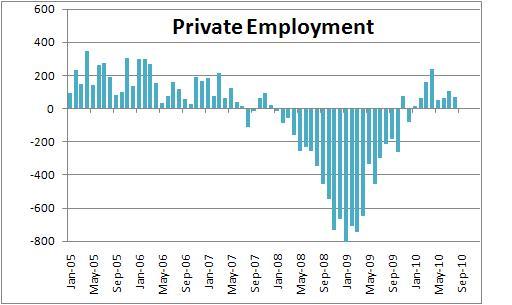
What about hiring? The unemployment rate is uncomfortably high. Thus far, businesses have been far more willing to work employees longer hours than to hire new workers. Why? In a word, uncertainty. There is uncertainty about the economic outlook as many economists continue to worry about the possibility of a double dip. There is uncertainty about the outlook for taxes. Will the Bush tax cuts be extended, or not? There is uncertainty about the cost of providing health insurance for workers. But even though the economy continues to face these headwinds, firms have begun to hire additional workers. Private sector employment has steadily gained strength, now stands at 75-100 thousand workers a month, and is poised to move higher. The labor market has come a long ways since the dark days of early 2009.
While many people have become far too pessimistic about the near-term economic outlook, make no mistake — the economy is not off to the races. Moderate GDP growth of 3.0% between now and yearend seems plausible. Consumer spending will be constrained for some time to come because the unemployment rate hovers near 10% which makes people nervous, consumers still have considerable debt, and they remain unwilling to spring for big ticket items like houses and cars despite extremely low interest rates and attractive home prices. But it is worth noting that slowly and steadily positive economic factors are starting to outweigh the bad, and GDP growth just might surprise to the upside.
Stephen Slifer
NumberNomics
Charleston, SC
Follow Me