
February 28, 2014
The downward revision to fourth quarter GDP data highlights the economic impact from this winter’s snow, ice, and brutally cold weather. Because economic growth in December fell short of what the government expected fourth quarter GDP growth was revised downwards from 3.2% to 2.4%. Unfortunately, January and February were equally miserable which suggests that first quarter GDP growth will suffer as well. We currently estimate first quarter GDP growth at 1.9%.
Is this winter weakness simply a function of the weather? Almost entirely.
Could there be something more fundamental at work? No.
When will we get a clearer picture of the underlying pace of economic activity? April.
Our sense is that almost all of the recent slump is weather-related. For the economy to swoon something has to happen. Interest rates could rise. Maybe the stock market plunges. Perhaps some political development in Washington or overseas causes consumers and business people to get nervous. But none of those things has happened.
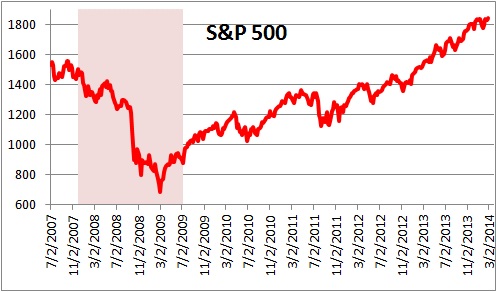
The stock market got jittery in mid-January as problems in emerging markets triggered a moderate sell-off, but it rebounded quickly and has climbed to yet another record high level.
The Federal Reserve reduced its bond purchases from $85 billion per month in November to $65 billion in February. That policy action by the Fed could have pushed long-term interest rates higher. Instead, they are currently about 0.25% lower than they were at the end of last year.

Meanwhile, Congress passed the first budget in four years in January and then passed legislation to increase the debt ceiling without any political gamesmanship. That is encouraging. It is the first time our policy makers in Washington have managed to work together in a very long time.
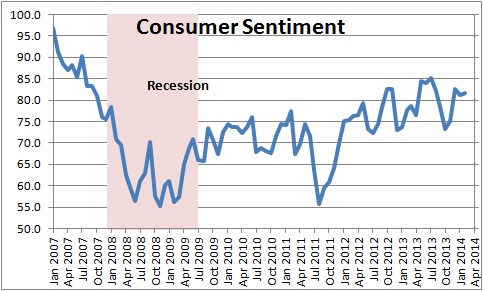
Even though we have seen a steady stream of soft economic statistics for December and January, consumers have kept the faith. Consumer sentiment remains close to the highest level thus far in this business cycle. If consumers feel good, they should continue to spend.
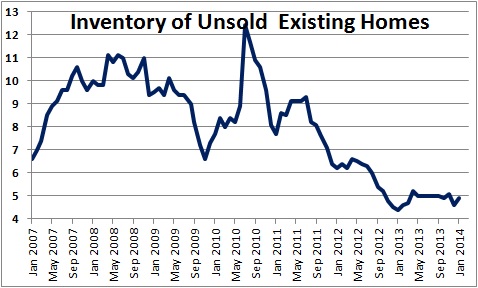
Because there has been no catalyst for slower growth, we conclude that the reported economic weakness the past few months is largely weather-related. The only non-weather factor we can find is the lack of available homes for sale which has curtailed the pace of home sales. But that means that any slowdown in housing (not caused by the weather) is supply related and not a reflection of softness in demand. That shortage of available housing should be alleviated later this year as builders step up the pace of production.
The bad weather will have a temporary negative impact on GDP growth. As noted earlier, fourth quarter GDP growth revised downwards from 3.2% to 2.4% largely because of the weather in December. Those same harsh weather conditions continued in January and February so first quarter GDP growth will also be affected We currently expect GDP growth this quarter of 1.9%, With GDP growth of 2.4% in the fourth quarter and 1.9% in the first quarter the doomsayers will be out in force. But they will be wrong.
Most – but not all — of the sales lost during this period will be made up in subsequent months. For example, if someone intends to purchase a new home they may not want to contend with the snow and ice in February, but once the weather improves they will make that purchase. The same thing is true for a new car. The purchase may be postponed, but it has not disappeared. However, some sales will simply be lost. If a family does not eat out at a restaurant in February because of the weather it will not eat out twice in March to make up for it. Some growth will be lost permanently. For that reason we have trimmed first quarter GDP growth to 1.9%.
But at some point spring will emerge and sales will rebound. The first evidence of that could be in the March data that are released during April. If that happens, GDP growth in the second quarter should accelerate to 3.5%.
The bad weather will largely shift growth from one quarter to the next, but will not put the economy on a permanently slower growth track. Ultimately the trend will re-assert itself. For the year we continue to expect GDP growth of about 3.0%.
Stephen Slifer
NumberNomics
Charleston, SC
Follow Me